
This section presents potential reuse applications for solid mining wastes. The applications are organized into three main categories: construction, environmental, and industrial. In general, construction uses are meant to encompass any related engineering and construction discipline involving civil, water, geotechnical, transportation, and structural components. These uses include fill or other granular materials and products such as bricks, asphalt concrete, and cement concrete. Environmental uses include applications that are related to land reuse, environmental remediation of a mine site, other remediation or treatment purposes, soil amendment and fertilizers, and carbon sequestration. Industrial uses include the wide range of metal and mineral industrial manufacturing needs, as well as critical minerals required for energy transition applications.
There is some overlap with the specific technologies and approaches for the applications in these three categories, such as structural and related environmental uses for mine site reclamation. These differences are primarily related to on-site uses for reclamation versus off-site uses in other types of construction. For example, reuse of solid mining waste as a fill or other granular material for on-site reclamation of the mine could also be applied to other civil infrastructure. In addition, some applications in construction could be defined as industrial. Regardless of the potential applications, the full life cycle of the mining waste should be considered, and a plan for safe recycling or disposal at the end-of-life for the materials should be developed (Section 3.3).
Reuse of mining waste is subject to applicable local and state laws that may allow or restrict use based on numerical standards or other metrics (Section 3.4). Site-specific numerical remediation goals may also apply, which could restrict mining waste reuse. To ensure compliance with goals and standards, prior to being put to reuse, mining waste must first be characterized (Section 3.1) to determine the applicability of any potential reuse application. After characterization, mining wastes could be classified as contaminated (exceeds the requirement) or noncontaminated (meets the requirement). In general, it is assumed that contaminated solid mining waste materials would not be suitable for various uses or would have greater restrictions in place, whereas noncontaminated mining waste materials could have more unrestricted use. For some contaminated media, there are applications that may involve methods of either encapsulation/solidification or physical capping that may influence the acceptability of reuse of the waste. For example, encapsulation/solidification methods can be effectively used to stabilize contaminants of concern (COCs), such as metals, through the blending of mining wastes with concrete or asphalt. Additionally, capping methods can be used to reduce water infiltration and air movement (oxidation), thereby greatly reducing the potential for leaching and MIW generation through the installation of concrete or asphalt covering, building structures, or low-permeability covers.
4.1 Construction Uses
Mined materials are fundamental to building civil infrastructure; however, the use of these resources has limitations, placing pressure on current and future infrastructure needs. In addition, there is increased demand for preserving existing natural resources and landscapes, reducing transportation costs, and reducing greenhouse gas emissions. The following subsections provide summaries of several common construction uses where solid mining waste may potentially be reusable as a substitute for conventional resources. This section focuses on off-site construction uses of mining wastes rather than on-site uses that may be part of a mine reclamation project. Mine reclamation applications for mining wastes are described in Section 4.2.2.
4.1.1 Fill and Gravel Materials
Fill and gravel material for construction can include any number of applications ranging from backfilling/grading commercial, residential, or industrial construction sites to construction of road and other transportation corridors (for example, railway). For civil construction projects, fill materials can come from off-site sources such as quarries or direct from the construction site as borrow material generated from subgrade excavations.
The specifications required for fill and gravel materials vary widely based on application. For example, general fill and compaction applications require well-graded aggregates, whereas filter sand and self-compacting bedding gravels typically use coarse and poorly graded materials that can be placed without need for further compaction. Foundation materials should be compactible to the specified density and at the standard Proctor moisture. Excessively clayey or sand-rich fill soils may not compact as functionally as well-graded materials and may not be acceptable under potentially applicable regulations. Poorly graded sand is another commonly used material for applications such as pipe bedding and cover and could be used as a fill material for beach and shoreline replenishment. Fine sand-like mining waste materials could be used as proppants in hydraulic fracturing for oil and gas production.
In addition to the variable applications, the type of fill specification can vary based on regional or state requirements that are in different climatic zones. For example, more northern latitudes may require fill material gradation and depth for buildings and road foundations that can withstand freeze and thaw cycles that would not be required in southern latitudes that are not subject to these climatic conditions. In other areas prone to seismic risks, applicable local and state regulations may have different specifications for fill materials depending on the application. In coastal flood or river floodplain zones, local regulations may require other specifications.
Defining the full array of fill and gravel material specifications is outside the scope of this guidance document; however, an adequate assessment of solid mining wastes from an abandoned or closed mine may confirm their suitability, geotechnically and environmentally, to be used for a beneficial purpose. The U.S. Department of Transportation (USDOT) Federal Highway Administration provides guidelines for the use of waste and byproduct materials in pavement construction. The guidelines include suggestions for sources and types of mineral processing wastes that may be suitable for asphalt paving applications, with specifications and design considerations and examples of successful reuse applications ( USDOT 2016 [I587BAKJ] USDOT. 2016. “Mineral Processing Wastes — User Guidelines — Asphalt Concrete — User Guidelines for Waste and Byproduct Materials in Pavement Construction — FHWA-RD-97-148.” U.S. Department of Transportation. https://www.fhwa.dot.gov/publications/research/infrastructure/pavements/97148/037.cfm. ). Conversely, a lack of characterization and poor planning has resulted in unsuitable materials being used and subsequent threats to human health and the environment (Section 6.1.3.4).
Prohibited use of deleterious fill materials is often part of a general fill specification. In the case of mining wastes that may contain metals or could generate leachate or AMD, these properties are typically defined as deleterious. Wastes that can increase the load of total or suspended solids to surface water bodies or can promote eutrophication (for example, nitrogen-containing blasting residuals or phosphate minerals) are also considered deleterious. Applicable local and state regulations such as institutional controls or other laws may restrict use of certain mining wastes as fill. In contrast, fill materials that may be capped with concrete, asphalt, or other materials (for example, low-permeability covers) that restrict air and water flow may be less subject to limitations from the chemical properties of the mining waste material (for example, metals, AMD potential). As for any reuse, haul cost for large quantities of fill would likely restrict its reuse. In some cases, however, mining wastes may be present within cities or otherwise populated areas close to the mine site, and reuse of these wastes could be more cost effective.
Most states allow for beneficial reuse of recycled rock or mine tailings in road base material according to the specifications of their departments of transportation (DOTs) (for an example, see Section 6.2.7). Although most state’s specifications do not specifically refer to recycled mine tailings for beneficial reuse, they do offer the opportunity to submit information and quality assurance packages to have a determination made with regard to the substitution of these materials as road base or coarse aggregates. In most cases, municipalities within each state will use their state DOT’s specifications for construction of roadways in their districts. The following are examples of some states with applicable specifications:
- Pennsylvania DOT (PennDOT) Publication 408, Section 703, and PennDOT Bulletin 14—In Pennsylvania, the reuse of mine tailings would need to follow the specifications in PennDOT Publication 408, Section 703 ( PennDOT 2020 [ZVH33C3C] PennDOT. 2020. “Publication 408/2020. Specifications.” Commonwealth of Pennsylvania, Department of Transportation. https://www.dot.state.pa.us/public/PubsForms/Publications/Pub_408/408_2020/408_2020_IE/408_2020_IE.pdf. ). Approval of specific reuse sources would need to be approved through the process in PennDOT Bulletin 14 ( PennDOT 2023 [GPKY2ZFH] PennDOT. 2023. “Bulletin 14. Publication 34 Aggregate Producers.” Commonwealth of Pennsylvania, Department of Transportation. https://www.dot.state.pa.us/public/pdf/construction/bulletins_supporting_docs/Bulletin%2014%20-%20Supporting%20Information.pdf. ).
- West Virginia DOT Standard Specifications, Section 703—West Virginia allows the reuse of slag and other materials produced from steel manufacturing. The specifications establish percentages of various materials in the coarse aggregate and base materials used for a project ( West Virginia DOT 2023 [MASHMHTF] West Virginia DOT. 2023. “Standard Specifications. Roads and Bridges.” West Virginia Department of Transportation. Division of Highways. https://transportation.wv.gov/highways/TechnicalSupport/specifications/Documents/2023_Standard_%2812-16-22%29.pdf. ).
- Kentucky Transportation Cabinet Standard Specifications, Section 805—Kentucky allows the reuse of materials that are not on the approved list. “The Department will consider a source for inclusion on the Aggregate Source List when the aggregate producer complies with KM 64-608 and provides the following: 1) A Quality Control Plan. 2) A satisfactory laboratory facility with all necessary testing equipment. 3) A Qualified Aggregate Technician to perform the required testing” ( Kentucky Transportation Cabinet 2019 [LNREKV7A] Kentucky Transportation Cabinet. 2019. “Standard Specifications for Road and Bridge Construction. Edition of 2019.” Kentucky Transportation Cabinet. https://transportation.ky.gov/Construction/StdSpecsWSupplSpecs/2019%20Standard%20Spec%20with%20Supplemental%20Spec%20July%202019.pdf. ).
- Ohio DOT Standard Specifications Section 304 ( Ohio DOT 2023 [TLQ48YBV] Ohio DOT. 2023. “Item 304 Aggregate Base.” Ohio Department of Transportation. https://www.dot.state.oh.us/Divisions/ConstructionMgt/OnlineDocs/Specifications/2005CMS/300/304.htm#:~:text=Use%20material%20that%20is%20reasonably,a%20manner%20to%20minimize%20segregation. ) and Section 703 Aggregate ( Ohio DOT 2023 [QNSX9TPY] Ohio DOT. 2023. “703 Aggregate.” Ohio Department of Transportation. https://www.dot.state.oh.us/Divisions/ConstructionMgt/OnlineDocs/Specifications/2005CMS/700/703.htm. ).
- Illinois DOT Standard Specifications, Section 1004—Illinois allows the reuse of chats in road base coarse aggregate. “Chats shall be the tailings resulting from the separation of metals from the rocks in which they occur” ( Illinois DOT 2016 [C6KBUVD8] Illinois DOT. 2016. “Standard Specifications for Road and Bridge Construction.” Illinois Department of Transportation. https://idot.illinois.gov/content/dam/soi/en/web/idot/documents/doing-business/manuals-guides-and-handbooks/highways/construction/standard-specifications/standard-specifications-for-road-and-bridge-construction-2016.pdf. ).
- Indiana DOT Section 904 Aggregates ( Indiana DOT 2022 [QYSJTDIF] Indiana DOT. 2022. “Indiana Department of Transportation. Standard Specifications.” https://www.in.gov/dot/div/contracts/standards/book/sep21/2022%20Standard%20Specificatins%20(w_changes).pdf. ).
- Colorado DOT Standard Specifications, Section 703 ( Colorado DOT 2021 [NHS9BJJ3] Colorado DOT. 2021. “Revision of Section 703. Aggregates.” Colorado Department of Transportation. https://www.codot.gov/business/designsupport/cdot-construction-specifications/2021-construction-specifications/recently-issued-special-provisions/2021-11-02/rev-sec-703-aggregates. ).
- New Mexico DOT, Section 812 Rock Riprap ( New Mexico DOT 2019 [7W26JFHD] New Mexico DOT. 2019. “Standard Specifications & Drawings. NMDOT.” New Mexico Department of Transportation. https://www.dot.nm.gov/infrastructure/plans-specifications-estimates-pse-bureau/standards/. ).
4.1.2 Rock Riprap
Riprap is another granular structural material; its size gradation is much larger than gravel’s. As with fill and gravel materials, numerous structural uses of rock riprap exist. Riprap is used to armor shorelines, streambeds, bridge abutments, foundational infrastructure supports, and other shoreline structures against erosion (for example, subaqueous capping). Riprap is also used underwater for stabilization of bridges or other types of structural pillars and foundations.
Riprap gradations can vary widely based on structural use or as specified by the required weight to withstand hydrologic forces. Riprap typically is specified by the size or weight of a percentage of the material. For example, a riprap type for a specific use may have a d50 6-inch particle size, which means that on average 50% of the material must be 6 inches in size. Uses and size ranges can vary significantly, but generally d50 for riprap ranges from 6 to 24 inches. A percentage by weight may also be specified for uses that require the stone to withstand hydrologic forces, such as flow within a stream channel or tidal activity. For example, a 100-pound d50 riprap should have at least 50% of the stone with a weight of 100 pounds. A d50 specification is just one representation of riprap size or weight, but specifications may contain multiple requirements, such as a d15, d85, and d100. Stone should also be durable, angular, and resistant to weathering. Projects commonly require a maximum length to width ratio of 3:1, which is intended to avoid the use of stones that are too long and flat in shape that can result in a lack of interlocking and stone movement under hydrologic, seismic, or other forces.
Solid mining waste that contains a higher percentage of larger-sized durable stone may be a potential product for reuse. Igneous rock, such as granite, are usually the most durable and are commonly used for riprap. Rock material derived from sedimentary deposits such as sandstone may not meet durability requirements of a state DOT or similar type of specification if the rock was weathered. Additionally, mining waste that contains acid-generating minerals may not be suitable from a durability and weathering standpoint. Not only would these rock materials potentially generate AMD, but they would also degrade more readily. For example, pyrite dissolution leaves pores in the rock matrix, which leads to further weathering from water infiltration and freezing and thawing cycles. In addition to potential AMD generation, these types of rocks likely also contain metals that may not be acceptable for various uses, especially those that interact with water. Continued weathering eventually leads to cracking and particle-size reduction, which increases reactivity with smaller particles, and leaching of metals.
Off-site use of large riprap material may be more limited compared to local sources of fill and granular materials if long transportation hauling is required. In many cases, large riprap material is better suited to on-site or local reuse.
4.1.3 Bricks
Structural bricks are used in building construction, building cladding, retaining walls, walkways, and ornamental purposes. Bricks can be fired or unfired. Fired bricks are typically made of a mixture of clay or pulverized shale with some sand or other aggregate that is molded into a shape, dried, then fired in a kiln at about 2,000°F (1,093°C). Unfired bricks are made of aggregates that are chemically set at relatively low temperatures with a binder such as Portland cement or an alkali-activated binder such as fly ash, granulated blast furnace slag, or sodium silicate.
Several ASTM International standards are relevant to bricks, including the following:
- ASTM C652-22 Standard Specification for Hollow Brick. Solid Masonry Units Made from Clay or Shale ( ASTM International 2022 [2M2ZBLXJ] ASTM International. 2022. ASTM C652-22. Standard Specification for Hollow Brick (Hollow Masonry Units Made from Clay or Shale. ASTM International. https://www.astm.org/c0652-22.html. )
- ASTM C62-17 Standard Specification for Building Brick. Solid Masonry Units Made from Clay or Shale ( ASTM International 2023 [AZ9NFEJ2] ASTM International. 2023. ASTM C62-17. Standard Specification for Building Brick (Solid Masonry Units Made from Clay or Shale. ASTM International. https://www.astm.org/c0062-17.html. )
- ASTM C216 Specification for Facing Brick. Solid Masonry Units Made from Clay or Shale ( ASTM International 2023 [K74WKNTW] ASTM International. 2023. ASTM C216-33. Standard Specification for Facing Brick (Solid Masonry Units Made from Clay or Shale). ASTM International. https://www.astm.org/c0216-23.html. )
- ASTM C67 Test Methods for Sampling and Testing Brick and Structural Clay Tile ( ASTM International 2018 [RE3ZTJHN] ASTM International. 2018. ASTM C67. Standard Test Methods for Sampling and Testing Brick and Structural Clay Tile. ASTM International. https://www.astm.org/c0067-17.html. )
- ASTM 1790-2 Standard Specification for Fly Ash Facing Brick ( ASTM International 2021 [QM6PUIU9] ASTM International. 2021. ASTM C1790-21. Standard Specification for Fly Ash Facing Brick. ASTM International. https://www.astm.org/c1790-21.html. )
In fired bricks, mining wastes have the potential to replace the clay and the sand or aggregate. Waste clay, generated during the processing of several industrial minerals such as kaolin, iron ore, and phosphate, is usually collected in settling ponds. The sand can be replaced with appropriately sized waste silicate aggregate. In brick making, any materials containing volatiles must be used with caution to avoid having the materials generate hazardous gas during the firing process. Sulfide-rich waste materials, for example, are undesirable because they will result in the emission of SOx during firing.
Mining wastes can be incorporated into unfired bricks more readily because there are no high-temperature reactions that can generate regulated air pollutants. Iron-ore tailings, copper tailings, red mud from producing bauxite via the Bayer process, quartz-feldspar tailings from spodumene mining, and lead-zinc mine tailings have all been tested in unfired bricks using a variety of binders. For example, unfired bricks from iron-ore tailings can be made with fly ash, granulated blast furnace slag, or sodium silicate ( Thejas and Hossiney 2022 [NZ5MNN6L] Thejas, H. K., and Nabil Hossiney. 2022. “Alkali-Activated Bricks Made with Mining Waste Iron Ore Tailings.” Case Studies in Construction Materials 16. https://doi.org/10.1016/j.cscm.2022.e00973. ).
4.1.4 Asphalt Concrete
Asphalt concrete, also known as asphalt, black top, or pavement, is a mixture of mineral aggregate bound together with a bitumen binder. The many formulations (designs) include hot mix asphalt, warm mix asphalt, cold mix asphalt, and macadam. Hot mix asphalt concrete is the most common pavement for high-traffic courses like highways. The mix design of the various forms of asphalt concrete varies based on expected road loads and durability needed for the specific job site as well as state DOT and USDOT requirements.
Mining waste is used in asphalt concrete as the aggregate; it may be the only aggregate or blended with other aggregates. Whether a particular mining waste is acceptable for use in an asphalt concrete project depends on many geotechnical and environmental factors as defined in the project specifications and the regulatory conditions surrounding its use (for example, from a superfund site). The aggregate properties need to meet the desired asphalt design criteria, including particle-size gradation, angularity, and durability (hardness). Other important aggregate properties include mineralogy (density, porosity, and strength) and chemical/physiochemical properties (wetting, adhesion, and stripping). The waste should not create a health risk when used in asphalt (see Section 6.1.9.1). For example, mining waste from the Tar Creek Superfund Site (chat) meets some of the particle-size distribution requirements for the size ranges smaller than the #10 sieve, but it is often blended with other non-chat aggregates to meet the gradation requirements of hot mix asphalt in highway construction projects that include larger particles. Figure 4-1 is a test specimen of asphalt concrete with chat making up part of the aggregate mix (see Section 6.2.7).
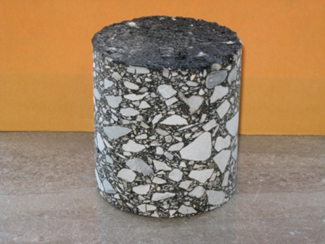
Figure 4-1. Test Specimen of asphalt concrete with mining waste (chat) making up part of the aggregate mix.
Source: Oklahoma Department of Environmental Quality
Reuse of chat at the Tar Creek Superfund Site in northeast Oklahoma is a good example of the reuse of mining waste as an aggregate in asphalt concrete. It is primarily composed of well-graded chert particles with fractured faces. It meets specifications, a large volume of material is available, infrastructure for processing and transportation already exists, adequate sampling and testing for environmental and geotechnical concerns has been conducted, and it has been accepted by regulators (Section 6.2.7). The large accumulations of chat in the Tar Creek area have been reworked (re-milled) several times, so the initial larger-sized rocks have been broken up, resulting in a well-graded durable material that meets local use requirements for asphalt concrete in county roads. Figure 4-2 shows the gradation curves for the material from several chat piles and the lead concentrations of each sieve fraction used in the particle distribution tests.
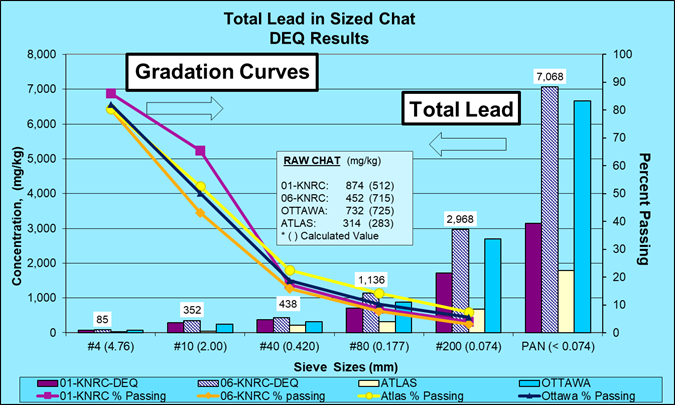
Figure 4-2. Graphs of particle-size gradation curves and corresponding lead concentrations for various raw chat samples.
Source: Oklahoma Department of Environmental Quality
Currently, chat is processed through wet screening (washing, Figure 4-3) to remove the fine-sized particles containing high metals concentrations. The larger-sized particles are transported to job sites many miles from the source to be blended with other particle sizes and binder to attain the asphalt design for each specific application. Chat meets some of the Oklahoma DOT standard specifications for highway construction for Type A, Type B, and Type C mixes, and “mine chats” are cited as appropriate materials in several sections of the specifications. Type A mixes are typically used as a base course, and Types B and Type C are typically used as a surface course ( Oklahoma DOT 2019 [5LDB9GR8] Oklahoma DOT. 2019. “2019 Standard Specifications for Highway Construction.” https://www.odot.org/c_manuals/specbook/2019%20-FULL-SPEC-Web-Version.pdf. ).
Another aspect of reuse of mining waste involves conducting environmental assessments or LCAs. The chat at the Tar Creek site and other nearby superfund sites contains elevated concentrations of cadmium, lead, and zinc, which are exempt from characterization as hazardous waste (Bevill Amendment, 40 CFR Part 261.4; see Section 3.4.5.1). This exemption does not apply when the waste is reprocessed or taken off site for reuse. In such instances, additional regulatory requirements, such as transportation rules and compliance with the “off-site rule”’ (40 CFR 300.440), as well as additional regulatory actions or approvals come into play ( ITRC 2010 [TVXDREGF] ITRC. 2010. “Mining Waste Treatment Technology Selection.” Interstate Technology and Regulatory Council. https://projects.itrcweb.org/miningwaste-guidance/index.htm. ). USEPA conducted an LCA of the risk to human health and the environment via exposures to metals in the chat during processing, transport to and storage at the point of use, and after encapsulation in asphalt, resulting in the so called “Chat Rule” (40 CFR Part 278), which allows for reuse of chat from the superfund site if encapsulated in asphalt (see the Tar Creek Case Study, Section 6.2.7). The sale of chat has been incorporated into the record of decision for Operable Unit (OU) 4 of the Tar Creek Superfund Site where part of the remedial action includes transporting excavated chat to a processor for use in asphalt instead of disposal at the repository ( USEPA 2008 [T6A5L5GE] USEPA. 2008. “Record of Decision. Operable Unit 4. Chat Piles, Other Mine and Mill Waste, Smelter Waste. Tar Creek Superfund Site. Ottawa County Oklahoma. OKD980629844.” U.S. Environmental Protection Agency. https://semspub.epa.gov/work/06/825746.pdf. ).
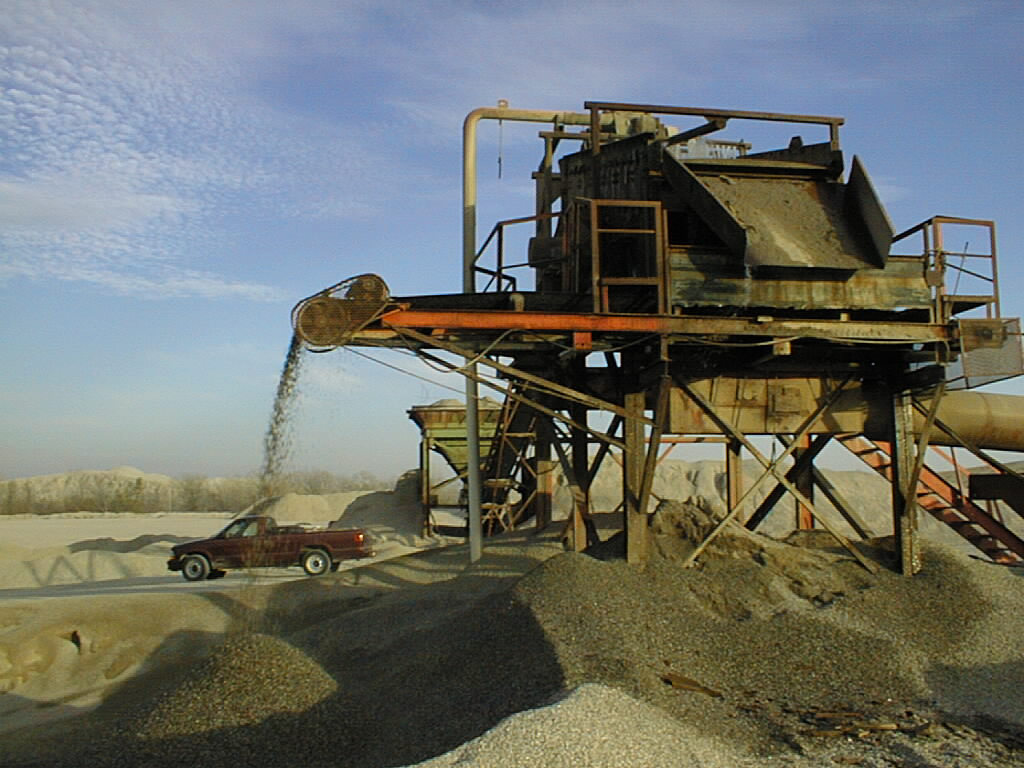
Figure 4-3. Wet screening (washing) of chat to separate different size fractions and remove fines.
Source: Oklahoma Department of Environmental Quality
4.1.5 Cement Concrete
Concrete is widely used in the construction of buildings and infrastructure and is made of aggregates and a binding cement. Portland cement, the most common cement, is made from a high-temperature reaction of a mixture of limestone and clay/shale with later additions of gypsum. The production of cement accounts for a significant amount of anthropogenic greenhouse gas emissions from the use of fossil fuels and the release of carbon dioxide from the limestone. The use of mining waste as cement replacement materials not only reduces mining waste storage but can also reduce air emissions from cement production ( Horns 2023 [IGZNF49T] Horns, Ryan. 2023. “Turning Mining Waste Into a Sustainable Concrete Replacement.” NREL Transforming Energy. https://www.nrel.gov/news/program/2023/turning-mining-waste-into-sustainable-concrete-replacement.html. ).
Concrete aggregates are typically a mixture of smaller (sand) and larger rock pieces derived from crushed rock or quarried from unconsolidated sediments. Similar to asphalt (Section 4.1.4), mine tailings can be used as the aggregate phase in concrete if they meet specifications. For example, iron mine tailings have been used to replace the sand in concrete ( Sabat et al. 2015 [Q9BET445] Sabat, Vikrant, Mujahed Shaikh, Mahesh Kanap, Mahendra Chaudhari, Sagar Suryawanshi, and Kshitija Knadgouda. 2015. “Use of Iron Ore Tailings as a Construction Material.” International Journal of Conceptions on Mechanical and Civil Engineering 3 (2): 2357–760. https://wairco.org/IJCMCE/August2015Paper2.pdf. ). Tailings used as aggregates must be characterized for physical properties, such as grain size distribution, and chemical properties, such as leaching (see Section 3.1). The results will determine their suitability for use in concrete.
Several organizations have developed specifications for structural concrete. Some of the more notable organizations include the following:
- American Concrete Institute (ACI). ACI develops standards, technical resources, and educational programs for concrete design, construction, and materials ( American Concrete Institute 2024 [5QZ8E4U3] American Concrete Institute. 2024. “Certification.” American Concrete Institute. Always Advancing. https://www.concrete.org/certification.aspx?gad_source=1&gclid=Cj0KCQjw8pKxBhD_ARIsAPrG45mVP9v3-xDuOSu2YYO9nzdp45A6NalPZr1Jbzl9lVP7Ib1LCD0lxssaAv3LEALw_wcB. ).
- American Society of Civil Engineers. This is a professional organization that develops standards and specifications for various aspects of civil engineering, including structural concrete ( American Society Civil Engineers 2024 [JWT37GKA] American Society Civil Engineers. 2024. “Home.” Infrastructure Leaders Building Communities. https://www.asce.org/. ).
- ASTM International. ASTM International develops international voluntary consensus standards. ( ASTM International 2024 [86UPHT27] ASTM International. 2024. “ASTM International — Standards Worldwide.” ASTM International. https://www.astm.org/. .
- National Ready Mixed Concrete Association. This is an industry advocate for the ready mixed concrete industry ( National Ready Mix Concrete Association 2024 [SETRC5CU] National Ready Mix Concrete Association. 2024. “Home.” NRMCA. https://www.nrmca.org/. ).
The material specification sections for concrete aggregates provided by the ACI and ASTM International provide guidelines and standards for the selection, testing, and use of aggregates in concrete mixtures. It is important to consult with a licensed structural engineer for evaluations of substitutions for aggregates, especially with mining tailings. The material specification sections specific to concrete aggregates are as follows:
American Concrete Institute (ACI):
- ACI 318 Building Code Requirements for Structural Concrete. This document provides requirements for concrete materials, including aggregates, used in structural concrete ( American Concrete Institute 2019 [46CTHFDN] American Concrete Institute. 2019. 318-19 Building Code Requirements for Structural Concrete and Commentary. American Concrete Institute. https://doi.org/10.14359/51716937. ).
- ACI 211.1 Standard Practice for Selecting Proportions for Normal, Heavyweight, and Mass Concrete. This standard provides guidelines for selecting concrete proportions, including the use of aggregates ( American Concrete Institute 2009 [FK7ZNGRW] American Concrete Institute. 2009. ACI 211.1-91. Standard Practice for Selecting Proportions for Normal, Heavyweight, and Mass Concrete. American Concrete Institute. https://www.concrete.org/Portals/0/Files/PDF/Previews/211.1-91(09)_preview.pdf. ).
- ACI 211.2 Standard Practice for Selecting Proportions for Structural Lightweight Concrete. This standard provides guidelines for selecting proportions for lightweight concrete, including lightweight aggregates ( American Concrete Institute 2004 [J5A3NJQE] American Concrete Institute. 2004. ACI 211.2-98: Standard Practice for Selecting Proportions for Structural Lightweight Concrete (Reapproved 2004). American Concrete Institute. https://www.concrete.org/publications/internationalconcreteabstractsportal/m/details/id/5093. ).
ASTM International:
- ASTM C33/C33M Standard Specification for Concrete Aggregates. This specification covers the requirements for concrete aggregates, including grading, durability, and quality ( ASTM International 2023 [2I6MS3SM] ASTM International. 2023. ASTM C33/C33M-18. Standard Specification for Concrete Aggregates. ASTM International. https://www.astm.org/c0033_c0033m-18.html. ).
- ASTM C330/C330M Standard Specification for Lightweight Aggregates for Structural Concrete. This specification covers the requirements for lightweight aggregates used in structural concrete ( ASTM International 2023 [AF5V93WC] ASTM International. 2023. ASTM C330/C330M. Standard Specification for Lightweight Aggregates for Structural Concrete. ASTM International. https://www.astm.org/c0330_c0330m-17a.html. ).
- ASTM C637/C637M Standard Specification for Aggregates for Radiation-Shielding Concrete. This specification covers the requirements for aggregates used in radiation-shielding concrete ( ASTM International 2020 [7ASUFWHZ] ASTM International. 2020. ASTM C637-20. Standard Specification for Aggregates for Radiation-Shielding Concrete. ASTM International. https://www.astm.org/c0637-20.html. ).
Both organizations have standards for the use of aggregates in concrete, but they do not specifically address the substitution of aggregate with mining wastes. The use of mining wastes as aggregates in concrete is a topic of ongoing research and development in the concrete industry. Current recommendations include consulting with experts in the field, conducting thorough testing and analysis, and ensuring that the resulting concrete mixtures meet the required performance and durability standards (see Sections 6.1.5.1 and 6.2.3).
Using substitute aggregates from mining tailings, such as mining waste or by-products, in concrete mixtures can have advantages and disadvantages. Although beneficial reuse of materials that would otherwise require transportation and disposal offers significant cost savings as an advantage, potential adverse impacts from using substitute aggregates from mining tailings need to be evaluated (Sections 6.1.3.4 and 6.2.3).
- Quality and Consistency. Mining tailings may have variable properties and characteristics, which can affect the quality and consistency of the concrete mix. Inconsistent properties of the substitute aggregates can lead to variations in the strength, durability, and performance of the concrete.
- Chemical Composition. Mining tailings may contain harmful chemicals, metals, or contaminants that can leach into the concrete mix over time. This can impact the long-term durability and environmental impact of the concrete structures. Some minerals in mine tailings degrade when exposed to water and oxygen—this property will adversely affect concrete. Tailings with these properties should not be used in concrete. For example, sulfide minerals such as pyrrhotite will weather to produce sulfuric acid and secondary minerals. The expanded volume of these reaction products will crack and degrade concrete if present in the aggregates ( Mauk et al. 2020 [P4MPMVCD] Mauk, Jeffrey L., Thomas C. Crafford, John D. Horton, Carma A. San Juan, and Gilpin R. Robinson, Jr. 2020. Pyrrhotite Distribution in the Conterminous United States, 2020. USGS Publications Warehouse. https://doi.org/10.3133/fs20203017. ). Additionally, lack of characterization and poor planning by using concrete aggregate with radioactive-bearing minerals at the Denver Radium Site and Uranium Mill Tailings Remedial Action sites in Colorado resulted in human health threats (Section 6.1.3.4).
- Workability and Handling. Substituting traditional aggregates with mining tailings may affect the workability and handling of the concrete mix. The properties of the substitute aggregates can influence the flowability, setting time, and overall performance of the concrete during placement and finishing.
- Structural Integrity. The use of substitute aggregates from mining tailings may pose risks to the structural integrity of the concrete structures. The properties of the substitute aggregates, such as particle shape, size distribution, and strength, can impact the overall strength and load-bearing capacity of the concrete.
Regulatory requirements and standards for the use of substitute aggregates in concrete may vary depending on the region and jurisdiction. Compliance with regulations related to material quality, safety, and environmental impact is essential when using mining tailings as substitutes in concrete mixtures. There are environmental regulatory considerations for the use of granular mining waste, such as chat, for aggregates in cement. Specific regulations are mentioned in the Tar Creek Superfund Site case study (Section 6.1.9.1 and Section 6.2.7).
In addition to replacing aggregates in cement concrete, mining wastes can potentially replace the raw materials used in Portland cement production. Some limestones can be replaced by other calcium-bearing minerals, such as anorthite plagioclase, as long as the calcium-silicon and aluminum-silicon ratios of the mixture are in the correct range. Materials that are added to concrete to enhance binding are called supplementary cementitious materials (SCMs). Common SCMs include blast furnace slag, steel slag, and fly ash. Granulated mining wastes that contain calcium, silica, and alumina with certain level of pozzolanic activity (in other words, the calcium hydroxide reactive capacity) can also be used as SCMs ( Simonsen et al. 2020 [82MLJ45H] Simonsen, Anne Mette T., Soili Solismaa, Henrik K. Hansen, and Pernille E. Jensen. 2020. “Evaluation of Mine Tailings’ Potential as Supplementary Cementitious Materials Based on Chemical, Mineralogical and Physical Characteristics.” Waste Management 102. https://doi.org/10.1016/j.wasman.2019.11.037. ).
4.2 Environmental Uses
Environmental uses of solid mining waste materials are those that involve land reuse, environmental remediation/reclamation of a mine site and other types of disturbed lands, use as soil amendments and fertilizers, and use for carbon sequestration.
4.2.1 Land Reuse
Mining waste disposal facilities provide a large open space that can be used for a broad range of land reuse activities; renewable energy generation and recreation are two primary examples. Renewable energy generation presents a growing and attractive option for converting old mine sites into profitable opportunities that can also help meet state and national goals for conversion to sustainable energy. Recreational uses of mine sites are much more varied and rarely present a significantly profitable opportunity. They also require additional assurance that the site is safe for use by the public. Once stabilized and deemed safe, mine sites can be reused for recreational projects that may generate profits and can be used to educate and include the public in conversations about mining and mine sites.
For a mining waste pile to be put to new land use, it must first be chemically and physically stable. Much of the same waste characterization and risk assessment as described for mining waste reprocessing must be completed (see Section 3.1 and Section 3.3). Additional regulatory considerations may apply if the site is required to be fully reclaimed prior to installation of land use infrastructure. The range of potential uses also depends on community factors such as the population density and land use of the area surrounding the mine, the level of community involvement, and the public perception of the mine site and new reuse activity.
The federal government, through the USDOE and USEPA, offers several incentive programs to promote the reuse of mining waste facilities for wind, solar, pumped hydro-storage, and geothermal energy projects, some of which include the following:
- Energy Community Tax Credit Bonus, also established by the Inflation Reduction Act, offers tax credits for renewable energy projects, facilities, and technologies located in energy communities ( Interagency Working Group on Coal and Power Plant Communities and Economic Revitalization 2024 [CWK42HWN] Interagency Working Group on Coal and Power Plant Communities and Economic Revitalization. 2024. “Energy Community Tax Credit Bonus.” Energy Community Tax Credit Bonus. https://energycommunities.gov/energy-community-tax-credit-bonus/. ).
- RE-Powering America’s Land is a USEPA initiative that encourages renewable energy development on current and formerly contaminated lands, landfills, and mine sites when such development is aligned with the community’s vision for the site ( USEPA 2024 [5R4WQLSU] USEPA. 2024. “RE-Powering America’s Land.” U.S. Environmental Protection Agency. https://www.epa.gov/re-powering. ).
- Clean Energy Demonstration Program on Current and Former Mine Land, through the USDOE and funded by the BIL and Inflation Reduction Act, will fund up to five new clean energy projects to demonstrate the conversion of current and former mine lands to clean energy projects. This opportunity is no longer available for funding; the five projects selected for award negotiations were announced in 2024 ( USDOE 2023 [GVMYV4N6] USDOE. 2023. “Clean Energy Demonstration Program on Current and Former Mine Land (CEML) Update.” Clean Energy Demonstration Program on Current and Former Mine Land (CEML) Update. U.S. Department of Energy. https://www.energy.gov/oced/clean-energy-demonstration-program-current-and-former-mine-land-ceml-update. ).
- Abandoned Mine Land Economic Revitalization Program, administered through the OSMRE, provides funds to eligible states and tribes to explore and implement strategies that return legacy coal mining sites to productive uses through economic and community development ( USDOI 2024 [34A6DMLW] USDOI. 2024. “Abandoned Mine Land Economic Revitalization (AMLER) Program.” U.S. Department of the Interior, Office of Surface Mining Reclamation and Enforcement. https://www.osmre.gov/programs/reclaiming-abandoned-mine-lands/amler. ).
Some states have adopted their own incentives for renewable power generation on stabilized mining waste facilities; however, the practice is not widespread at the time of this document. For example, the Vermont Public Utilities Commission adopted rules that incentivize the use of mineral extraction sites for installation of new renewable energy projects ( Vermont Public Utility Commission 2024 [W26PSN8A] Rule Pertaining to Construction and Operation of Net-Metering Systems, 50 (2024). https://puc.vermont.gov/sites/psbnew/files/documents/5100-net-metering-effective-3-1-2024.pdf. ). Some states and municipalities offer incentives that support installing renewable energy on contaminated lands in the form of city bonds, tax incentives, or other programs (Section 3.2). The Database of State Incentives for Renewables & Efficiency provides general information on federal, state, and local incentives and policies for renewable energy ( NC Clean Energy Technology Center 2024 [KWPGZHME] NC Clean Energy Technology Center. 2024. “Database of State Incentives for Renewables & Efficiency®.” NC Clean Energy Center. https://www.dsireusa.org/. ).
Land reuse and renewable energy generation at closed mine sites is becoming increasingly popular, and many operators have found it a worthwhile endeavor, even without significant state or federal incentives. Case studies of sites that have successfully implemented land reuse projects on mining waste facilities offer a pathway for prospective sites. For example, in Virginia, federal funding has helped facilitate projects from reclamation and portal closure to solar installations to construction of a year-round event venue, all on abandoned coal mine lands ( Virginia Department of Energy 2021 [GU3WQZBG] Virginia Department of Energy. 2021. “Abandoned Mine Land Economic Revitalization Program.” Abandoned Mine Land Economic Revitalization Program. https://www.energy.virginia.gov/coal/mined-land-repurposing/AMLER.shtml. ).
4.2.1.1 Renewable Energy
Solar
Solar power generation requires large open areas of land. Abandoned or reclaimed mine sites offer excellent opportunities for solar installations that allow the reuse of land that may not be suited for other applications. Solar installations on abandoned land or reclaimed mine sites have been successful at locations around the world. For example, the closed Chevron Questa Molybdenum Mine in Questa New Mexico, owned by Chevron Mining Inc., includes a 21-acre pilot solar installation on a portion of their reclaimed tailing facility (Figure 4-4). The solar project has been fully operational since April 2011 and has successfully provided enough energy to power more than 150 homes annually ( USEPA 2013 [ZZWQ6X6I] USEPA. 2013. “New Energies: Utility-Scale Solar on a Tailing Disposal Facility. Chevron Questa Mine Superfund Site in Questa, New Mexico.” U.S. Environmental Protection Agency. https://semspub.epa.gov/work/06/300190.pdf. ). The project required coordination with numerous federal, state, and local government agencies, stakeholders, the local electric cooperative, and the public. The project initially used New Mexico’s Renewable Energy Production tax credit, which expired in 2021. Today the project stands as a leading example of how renewable energy projects can be successfully implemented on former mine lands and superfund sites (Section 6.1.8.2). The success of the pilot solar installation has encouraged additional clean energy development proposals for the site, including expanding the existing solar installation and hydrogen production and storage facilities that would be powered by renewable energy ( USDOE 2023 [GVMYV4N6] USDOE. 2023. “Clean Energy Demonstration Program on Current and Former Mine Land (CEML) Update.” Clean Energy Demonstration Program on Current and Former Mine Land (CEML) Update. U.S. Department of Energy. https://www.energy.gov/oced/clean-energy-demonstration-program-current-and-former-mine-land-ceml-update. ; USEPA 2013 [ZZWQ6X6I] USEPA. 2013. “New Energies: Utility-Scale Solar on a Tailing Disposal Facility. Chevron Questa Mine Superfund Site in Questa, New Mexico.” U.S. Environmental Protection Agency. https://semspub.epa.gov/work/06/300190.pdf. ).
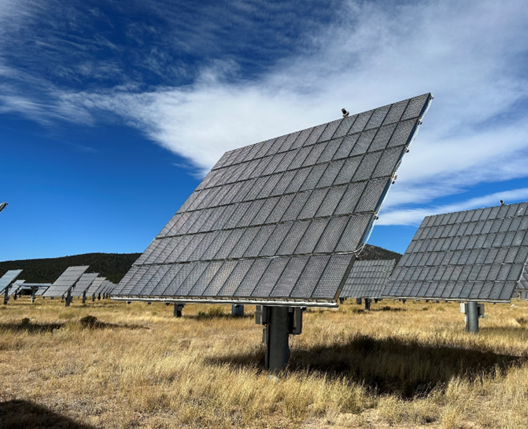
Figure 4-4. Solar installation at Chevron Questa Mine.
Source: Interstate Technology & Regulatory Council Reuse of Solid Mining Waste Team
Additional solar reuse projects include, but are not limited to, the following:
- Pennsylvania Mine in Keystone, Colorado. This is a superfund site that uses a hybrid solar-diesel generator to recharge equipment and power remediation activities ( USEPA 2015 [RF5CUBWM] USEPA. 2015. RENEWABLE ENERGY PROJECTS AT MINE SITES, PROGRESS AND HIGHLIGHTS FROM ACROSS THE COUNTRY. ).
- Kidston Pumped Storage Hydro Project under construction in Kidston, Far-North Queensland, Australia. Solar and hydro-electric power will be generated at the former gold mine site.
- Amazon’s solar farm in Garrett County, Maryland. This site is called the CPV Backbone and is being built on the site of the recently closed Arch Coal mine ( Lahey 2023 [VC9QUU3J] Lahey, Susan. 2023. “I.” ESG Today. https://www.esgtoday.com/amazon-launches-its-first-brownfield-renewable-energy-project-on-abandoned-coal-mine/. ).
- The Elizabeth Mine Superfund Site in Stafford, Vermont. This is a superfund site that had a 7megawatt solar farm installed at the site as part of the land reclamation for the remedial action ( USEPA 2019 [UY6ZYRU7] USEPA. 2019. “Site Redevelopment Profile. Elizabeth Mine Superfund Site. Strafford, VT.” U.S. Environmental Protection Agency. https://semspub.epa.gov/work/HQ/100002282.pdf. ).
- Wise County Ida Solar Project in Wise County, Virginia. This is the first large-scale solar development in Southwest Virginia. It is on previously coal-mined land and is projected to generate more than 3 megawatts of clean energy to be used by the Mineral Gap Data Center ( Wise County, Virginia 2021 [XPGAWIQM] Wise County, Virginia. 2021. “Wise County Celebrates Groundbreaking on Mineral Gap Solar Project.” Wise County Celebrates Groundbreaking on Mineral Gap Solar Project. https://www.wisecounty.org/CivicAlerts.aspx?AID=64. ).
Wind
Due to the large on the ground spacing required between windmills, renewable energy generation from wind on closed mine facilities offers an opportunity to implement multiple land reuses at the same mine site, such as wind power generation and grazing. Successful examples include the Buffalo Mountain Wind Farm outside of Oliver Springs, Tennessee, which is situated atop a former strip mine for coal. At this site, the Tennessee Valley Authority manages wind turbines that supply power to local residents. Another example is the Klettwitz wind farm situated in a former lignite mining region in Brandenburg, Germany, which is the largest wind farm in Europe ( USEPA 2023 [N8LZ5T9X] USEPA. 2023. “Abandoned Mine Lands: Revitalization and Reuse.” U.S. Environmental Protection Agency (blog). October 18. https://www.epa.gov/superfund/abandoned-mine-lands-revitalization-and-reuse. ).
Geothermal
Geothermal installations on abandoned or reclaimed mine sites have been successfully implemented. For example, the Underground Mine Education Center in Butte, Montana, is on 65 acres of land donated to Montana Technological University. The donated land includes the Orphan Boy mine shaft that contains geothermally heated water that stays at an average of 78°F year-round. In 2012, Montana Technological University was awarded a grant from the USDOE to install a 50-ton ground-source heat pump (GSHP), which has successfully provided heating and cooling for the 50,000 square-foot Natural Resources Building. Figure 4-5 depicts the location of the mine shafts in relation to the university. More information on this case study example can be found in Section 6.1.7.4.
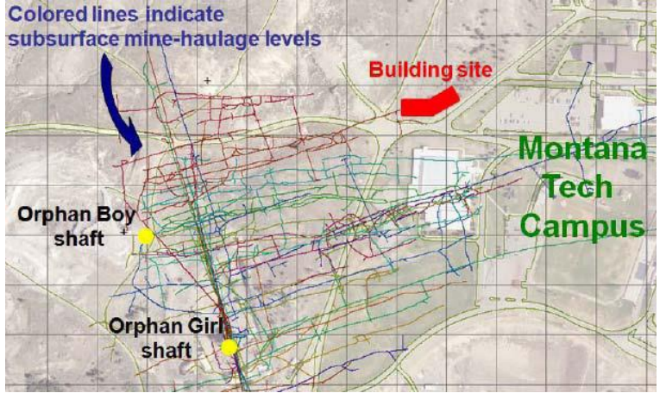
Figure 4-5. Orphan Boy and Orphan Girl mine shafts in relation to Montana Technological University.
Source: Montana Technological University
Geothermal heating harnessed from abandoned mine shafts has also been successfully completed in several other areas ( Preene and Younger 2014 [CGKGW5R5] Preene, M., and P. L. Younger. 2014. “Can You Take the Heat? – Geothermal Energy in Mining.” Mining Technology 123 (2): 107–18. https://doi.org/10.1179/1743286314Y.0000000058. ; Watzlaf and Ackman 2006 [YN4SPNCQ] Watzlaf, George R., and Terry E. Ackman. 2006. “Underground Mine Water for Heating and Cooling Using Geothermal Heat Pump Systems.” Mine Water and the Environment 25 (1): 1–14. https://doi.org/10.1007/s10230-006-0103-9. ). Some examples include the following:
- Park Hills, Missouri. Mine waters from flooded lead mines are used to heat and cool an 8,100-square-foot municipal building.
- Springhill, Nova Scotia. Mine waters in abandoned coal mines are being used to heat and cool a 151,000-square-foot building.
- Henderson, Colorado. Mine water from an old molybdenum mine is used for direct heating of mine ventilation air to prevent icing of shafts and equipment and to control mine working temperatures.
4.2.1.2 Recreation
Recreational use of closed mining waste facilities has taken place almost as long as mining itself. Often prompted by intrepid adventurers, this type of reuse can pose serious health risks if not properly managed. From drownings and health concerns caused by unknowing citizens swimming in flooded quarries to collapses on curious cavers while exploring open mine shafts or adits, the harmful effects of unregulated recreational use of closed mine sites have a long and unfortunate history ( MSHA 2007 [DMTM7S3Q] MSHA. 2007. “MSHA Issues Warning to Children and Adults to ‘Stay Out and Stay Alive.’.” Mine Safety and Health Administration. https://web.archive.org/web/20180128132915/https://arlweb.msha.gov/MEDIA/PRESS/2007/NR070319.asp. ).
Because of the potential for harm, reuse of mining waste and closed mine sites for recreational opportunities must be carefully evaluated. Again, much of the waste characterization (Section 3.1) and risk assessment (Section 3.3) described for mining waste reprocessing must be completed. While not always feasible, many sites can be stabilized and safely converted into interesting and unique attractions. Examples of recreational uses of closed mine facilities are as varied as the mining operations themselves.
Sports
The Old Works Jack Nicklaus signature golf course (Figure 4-6), located in Anaconda, Montana, is situated on an 1800s copper smelter site (see Sections 6.1.7.1 and 6.2.5). After lying idle for nearly a century, the copper smelter became a superfund cleanup site in 1983. Anaconda citizens formed a group in 1989 to promote the construction of a “world-class” golf course on the smelter site. The golf course was developed as part of the superfund remedy; therefore, no formal permits were required; however, design criteria from applicable regulations were included as part of the design ( USEPA 1994 [R954YGAN] USEPA. 1994. “EPA Superfund Record of Decision. Old Works/East Anaconda Development Area Site.” U.S. Environmental Protection Agency. https://nepis.epa.gov/Exe/tiff2png.cgi/91001SJQ.PNG?-r+75+-g+7+D%3A%5CZYFILES%5CINDEX%20DATA%5C91THRU94%5CTIFF%5C00001975%5C91001SJQ.TIF. ). The site uses the copper slag for its signature black sand traps and was requested by Jack Nicklaus because the copper slag met all his requirements for high-performing sand traps. The design and construction of the course was completed by the Atlantic Richfield Company (Atlantic Richfield). The course was donated to the community of Anaconda, which now owns and operates the site. Protections were provided to the community via a prospective purchaser agreement with USEPA ( VisitMTcom 2024 [FEHB9KYT] VisitMTcom. 2024. “OLD WORKS GOLF COURSE.” VisitMT.Com. https://www.visitmt.com/listings/general/public-golf-course/old-works-golf-course. ). See Section 6.2.5 for more information.
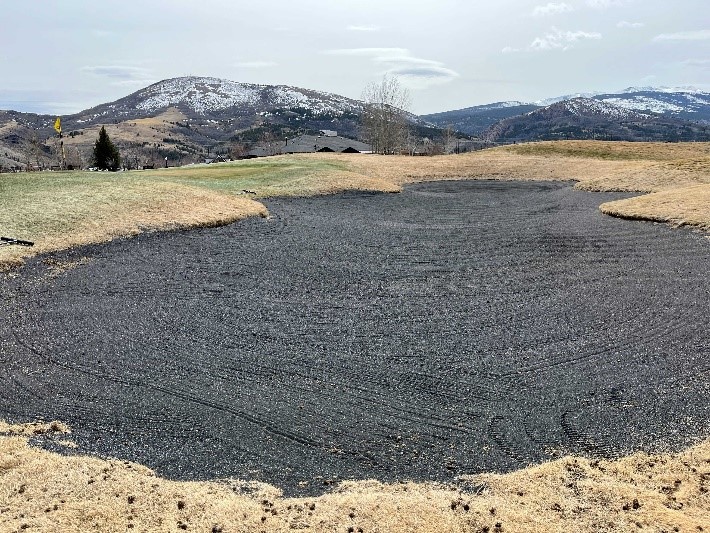
Figure 4-6. Black sand traps at the Old Works Jack Nicklaus signature golf course.
Source: CDM Smith on behalf of the U.S. Environmental Protection Agency Region 8
The Copper Mountain Sports & Recreation Complex Area was built on the site of the Clark Tailings Repository and is currently used as a community sports facility in Butte, Montana. The Clark Tailings Repository was capped with a multilayer soil cover along with a monitored irrigation system to minimize the risk from over-irrigation. The Sports & Recreation Complex is operated by the county, but the underlaying repository is permitted under RCRA (Section 6.1.7.4).
Hiking and Biking
Hiking trails offer many advantages as a land reuse option for old mine sites. Hiking trails have a relatively low cost to implement and maintain and also allow completely reclaimed sites to remain undisturbed. At Treadwell Beach on the coast of Douglas Island, Alaska, the old Treadwell gold mine has been restored and converted into a recreational area attached to Sandy Beach and Savikko Park. In its heyday, from 1911 to 1917, the Treadwell mine was the largest gold mine in the world. Today the park offers walking trails and interpretive signage that conveys the history of the Treadwell Mine ( Corvus Design 2018 [GI5YVBTS] Corvus Design. 2018. “Treadwell Mine Historic Site and Trail Plan.” https://juneau.org/wp-content/uploads/2019/12/Treadwell-Mine-Historic-Site-Trail-Plan-2018.pdf. ).
The fully reclaimed Flambeau mine located near Ladysmith, Wisconsin, is the only metallic mine (copper-gold) that was permitted, constructed, operated, and reclaimed under the state’s existing regulatory framework. Reclamation was substantially completed in 1999; post-mining land uses for the site are light recreation and wildlife habitat. Much of the needed material for backfilling, contouring, and wetland construction was sourced from materials removed during site construction. Native grasses, shrubs, and trees were planted on the site, and a public trail system was established ( Wisconsin DNR 2024 [GCHZVGYT] Wisconsin DNR. 2024. “Reclaimed Flambeau Mine.” Wisconsin Department of Natural Resources. https://dnr.wisconsin.gov/topic/Mines/Flambeau.html. ).
Another example of reusing a mining site for hiking can be found in the Eagle Picher case study (Section 6.2.1).
Many mines use railway systems to connect to nationwide shipping and receiving railroad lines. After mine closure, these rail lines remain flat, open pathways, often traversing wild and rugged landscapes. Similar to the rails-to-trails model, some communities have converted old rail lines to biking and hiking paths. One example of such a project is the Mineral Belt Trail in Leadville, Colorado ( Stark 2018 [2ARK43SZ] Stark, Laura. 2018. “Colorado’s Mineral Belt Trail. Rails to Trails Conservancy.” Colorado’s Mineral Belt Trail. https://www.railstotrails.org/trailblog/2018/october/15/colorados-mineral-belt-trail/. ). This trail forms a loop around the city by connecting portions of old mine rail lines. The trail incorporates old mining infrastructure such as a mining tower and ore carts with interpretive signage along the way. Another example is at the Keeney’s Creek Rail Trail in West Virginia, where the rail line formerly used for coal mining has been converted into a hiking and biking trail system that is part of the New River Gorge National Park and Preserve ( NPS 2022 [LCUQVWMX] NPS. 2022. “Keeneys Creek Rail Trail (U.S. National Park Service).” https://www.nps.gov/places/keeneys-creek-rail-trail.htm. ).
Skiing
Park City Mountain ski resort, located in Park City, Utah, is the largest ski resort in the United States. It also boasts an interesting history with three old mine sites completely enclosed within the ski area: the Silver King mine, the California-Comstock Mine, and the Thaynes mine. The old mine sites have been used by skiers since the mid-1970s, and many of the original buildings still stand and are in use as part of the ski resort today. Many of the mine sites and tailings dumps within the ski resort have been reclaimed. Other mine sites around the town have also been reclaimed and now host neighborhoods, business districts, and other resorts ( Buck 2023 [49YC6ENP] Buck, Brian. 2023. “The Mines Still Among Us.” Park City Museum. https://parkcityhistory.org/the-mines-still-among-us/. ).
One unique reuse of a mine site exists in Bavaria, Germany, where the by-products of an old kaolinite mine have been converted into a giant sand dune. People enjoy summertime sand skiing and sandboarding. The sand is pure quartz, and unlike most mining waste, poses little risk to human health or the environment. The park is called Monte Kaolino, with hiking trails, camping, and a ski lift. The park was used to host the Sandboarding World Championship until 2007 when the site was renovated to include more attractions ( Debczak 2021 [63HJ8NX6] Debczak, Michele. 2021. “At This Ski Resort, the Slopes Are Covered With Sand Instead of Snow.” Mental Floss. https://www.mentalfloss.com/article/652645/monte-kaolino-germany-sand-ski-resort. ).
4.2.2 Environmental Remediation/Reclamation
Remediation/reclamation of mine sites typically requires fill, gravel, and rock materials to stabilize and restore disturbed areas. Mine reclamation is a term often used in mining permitting and the mining industry to represent the post-mine condition or, in general, for the restoration of disturbed lands. Remediation is a term more related to restoration of a contaminated site. For the purposes of this section, the term remediation is used for simplification to represent any type of on-site environmental reuse. It is beneficial to source remediation materials locally from on-site or near a mine site to reduce costs. This section presents several on-site reuses of mining waste materials for the purpose of mine site remediation. These uses can be structural in nature similar to construction uses described in Sections 4.1.1 and 4.1.2 or may provide some other environmental remedial benefit such as neutralization, stabilization, infiltration reduction (capping or lining), or contaminant concentration reduction (for example, metals) through blending and dilution. Categories of environmental remediation uses of mining wastes presented include containment (for example, cover or liner systems), grading and backfill, gravel and riprap uses, and treatment materials.
As stated in Section 3.3, mine site remediation is implemented to reduce risks to human health and the environment, and any new reuse of mining wastes either on-site or off-site should not pose unacceptable risks to human or environmental receptors of concern. With this best practice in mind, reuse of mining wastes on-site during remediation are described below with respect to meeting or exceeding the applicable numerical remediation goals, or in other words, noncontaminated or contaminated, respectively. If mining waste meets the specification requirements as a suitable replacement for an off-site material and is used in a manner consistent with the remediation goals, then the mining waste may be reused for a remediation purpose. As an example, at the Kittimack Site in the Bonita Peak Mining District Superfund Site, low pH tailings were blended with high pH water treatment plant sludge to address a public health threat and mitigate these exposures. The blended mixture was stacked into an approximately 30-foot-tall revegetated berm along County Road 2 east of Silverton, Colorado (Section 6.2.2).
4.2.2.1 Containment
Containment involves physical measures applied to contaminated media to control the release and transport of contaminants and prevent direct contact or exposure to the contaminants. Mining waste remediation usually requires construction of an on-site repository as a containment method to consolidate wastes or in-place capping to prevent exposure risks and infiltration to those materials. There are numerous types of cover systems, including low-permeability, evapotranspiration (ET), and exposure barrier, and their applicability depends on site and owner requirements. In addition, the surfaces of covers may be vegetated with grasses/forbs, shrubs, trees, or covered with a rock riprap material instead of vegetation. The variety of cover system types and surfaces employed at mine sites are based on site-specific characteristics (for example, climate conditions), waste material characteristics, and legal requirements (for example, a state requirement for a low-permeability cover type). Most containment applications for site remediation would also require development of environmental covenants to document the waste materials that are contained beneath the cover and place use restrictions on the land to avoid disturbing the wastes (see Section 6.2.1).
Mining waste materials of varying characteristics may be used as a component of the cover layer or the entire cover itself. Contaminated mining wastes that exceed remediation goals should not be used on the surface of the cover where receptors of concern would be exposed to the contaminants (usually metals).
Exposure Barrier
Exposure barriers are designed primarily to limit direct exposure to contaminated media by potential receptors but may also provide some reduction in infiltration. Exposure barriers are constructed of natural materials such as soil or rock with thicknesses that vary depending on site conditions, cover objectives, and substantive requirements of any applicable permits. Site conditions include factors such as climate and the nature of material being covered. Exposure barriers provide an erosion/protective surface over the underlying material, potential reduction in net infiltration, and a stable surface for establishing vegetation. Usually, rock type covers are preferred in steeper slope scenarios for stabilization (in other words, steeper than 2:1 horizontal to vertical) or where there is an excess of this type of rock resource available on-site.
Exposure barriers mitigate the potential for risks related to incidental ingestion or inhalation; however, they do not provide a significant barrier to infiltration of water into underlying contaminated media. A rock cover could be considered rather than a revegetated cover if suitable growth media are either limited or exceedingly expensive; however, this type of exposure barrier would be even less effective at reducing infiltration. Regular maintenance may be required to maintain the integrity of the exposure barrier.
Some specific examples of reuse of mining wastes in an exposure barrier cover are as follows:
- Using a non-acid-generating mining waste as a subsoil or topsoil for a soil exposure barrier. This could be implemented if the mining waste is in compliance with applicable remediation goals and could be processed in a manner that would allow that material to meet the specification requirements. In a soil exposure barrier cover, a common approach is a 12- or 18-inch subsoil layer and a 12- or 6-inch topsoil layer.
- A topsoil material should have appropriate nutrient and organic matter content and meet soil texture requirements for the types of proposed vegetation. Topsoil for reclamation may be generated from an on-site borrow source within an unimpacted area to reduce costs of haulage; however, there are cases where an off-site topsoil may be brought on-site. A common reclamation approach is to ensure processed on-site soil is screened to a size smaller than 2-inches to create a topsoil, followed by amendment with fertilizer, organic matter, and agricultural lime (depending on pH requirements). There may be site-specific cases where mining waste materials could be processed into topsoil material. For example, a coarse tailings material could be used that meets remediation goals for a surface application and is not reactive (for example, leachable or acid-generating).
- A subsoil material can usually contain less nutrients and organic matter and may be coarser in nature. Subsoil for reclamation is also usually generated from an on-site borrow source within an unimpacted area; subsoil is usually obtained from an adjacent area within the B horizon (subsoil or overburden). A common reclamation approach is to ensure processed on-site soil is screened to a size smaller than 6-inches to create a subsoil, followed by amendment with fertilizer, organic matter, and agricultural lime (depending on pH requirements). The need for screening material should be based on the specified thickness of the subsoil layer and the nature of the borrow soil used. If only a 12-inch subsoil is specified and the borrow soil is coarse with greater than 6-inch cobbles, then screening is likely needed to ensure the subsoil layer consists of adequate soil-like material. Similar to topsoil, if a mining waste material meets the remediation goals and other specifications, it could be used as a surface or subsurface material. Mining waste that exceeds human health–related remediation goals on the surface may be suitable for reuse as subsoils as long as it does not contain metals concentrations that would impact surficial vegetation growth through wicking or penetrating root structures.
- Using a non-acid-generating mining waste as a rock exposure barrier. The same metrics described in Section 4.1.2 for construction uses of rock riprap apply to the use of riprap for a mining waste cover layer. This could be implemented if the mining waste contained a sufficient quantity of larger-sized durable stone and the rock was not acid-generating. Screening of the on-site rock would likely be needed to remove finer grains and meet the specified gradation for the project design. The specified use of rock riprap rather than a vegetated cover over mining waste is usually because the final grade is too steep for a stable soil slope. The use of rock provides less infiltration protection but may meet the specifications needed to stabilize an area from erosion.
Evapotranspiration (ET) Covers
ET covers, also known as alternative or store-and-release covers in certain guidance and some state solid waste regulations, are designed to limit direct exposure to contaminated media by potential receptors and provide significant reduction in infiltration—but without the use of low-permeability materials (for example, clay, geomembranes). ET cover systems use water balance components to minimize percolation. These cover systems rely on soil properties (for example, soil texture and associated soil water storage capacity) to store water until it is either transpired through vegetation or evaporated from the soil surface. The greater the storage capacity and evapotranspirative properties are, the lower the potential for percolation through the cover system. Examples of typical ET vegetation are perennial grasses and forbs that have shallower root structures that do not penetrate to deep strata the way the roots of many woody species do. ET covers are typically only applicable for use in drier environments such as the semiarid and arid desert areas of the western United States ( Wang et al. 2004 [8IG5SSAW] Wang, Lawrence, Yung-Tse Hung, and Lo, Howard. 2004. Handbook of Industrial and Hazardous Wastes Treatment. 2nd ed. Edited by Constantine Yapijakis. CRC Press. https://doi.org/10.1201/9780203026519. ).
Rather than low-permeability type covers, ET covers rely on a thick layer of natural soil materials that can accept various types of vegetation, including trees. Typical synthetic low-permeability covers cannot be planted with trees because of the potential destruction of the low-permeability layer. The ET cover thickness and material properties must be sufficient to store and release precipitation under various climate scenarios and an acceptable design threshold storm event. Changes in local climate and precipitation should also be considered. The ET cover layers can also contain a capillary break layer of coarser sand or gravel placed under the finer-grained soil layer. The differences in the unsaturated hydraulic properties (in other words, soil matric potential) between the two layers minimize percolation into the coarser grained (lower) layer under unsaturated conditions.
Design of ET covers requires modeling and collection of the geotechnical properties of the proposed materials, which often come from locally obtained borrow material. For any cover system that contains soil-like layers, a borrow investigation to evaluate on-site or local soil resources is usually a required predesign activity. Because of the large quantities of cover materials needed, local borrow sources are needed for ET covers to be cost effective.
As noted above, ET covers can require several layers of differing materials and in some cases several feet of material to provide the needed infiltration protection. Mining waste could be reused/reprocessed as a component of an ET cover if the material meets the remediation goals and is not potentially toxic to vegetative growth of the surficial vegetation. One example may be the use of a coarse mine rock at the base of the ET cover with an overlying geotextile layer and then ET cover finer-grained soils above the geotextile. The coarse nature of the mine rock and finer-grained soils above the geotextile can create a capillary break effect to help maintain soil moisture within the ET cover layer. In another example that is similar to the use of mining waste as subsoils for exposure barrier covers, processing methods such as crushing and screening of mining wastes may be able to create the required soil gradations needed for the lower ET cover layers below the vegetative/topsoil layer. A detailed case study is provided for the Tar Creek Superfund Site, which includes a description of the remedial reuse of transition soils at the Tar Creek repository as part of the ET cover (Section 6.2.7).
Low-Permeability Covers and Liners
Low-permeability covers and liners can be constructed of compacted clay, bentonite-amended soil, geosynthetic clay, or geomembrane materials. Depending on the material type and construction method, the saturated hydraulic conductivities for the barrier layers are typically between 1×10⁻⁵ and 1×10⁻⁹ centimeters per second. In addition, low-permeability systems generally include shallow-rooted plants and additional layers, such as surface layers to prevent erosion, protection layers to minimize freeze/thaw damage, internal drainage layers, and gas collection layers ( Rock et al. 2012 [WK9IZTS2] Rock, Steve, Bill Myers, and Linda Fiedler. 2012. “Evapotranspiration (ET) Covers.” International Journal of Phytoremediation 14 (sup1): 1–25. https://doi.org/10.1080/15226514.2011.609195. ). Low-permeability systems limit direct exposure to contaminated media by potential receptors and reduce infiltration as well as upward migration of groundwater into buried waste. These types of covers and liners limit AMD generation and subsequent leaching. Like ET covers, for any low-permeability cover or liner system type, local or on-site borrow soil sources are preferred to reduce implementation costs.
Bentonite-amended soil covers and liners can consist of soils amended with bentonite. These systems are generally used as one component of a low-permeability multilayer system. In these systems, the low-permeability layer (bentonite-amended material) is placed directly over or under the contaminated media. A drainage layer, a subsoil/frost protection layer, topsoil, and vegetation are also components that support these types of covers and liners. Alternatively, pure clay layers can be used as a low-permeability material. Bentonite-amended soil or pure clay layer systems may be subject to desiccation during dry periods of the year, which can adversely affect their performance. They can also be affected by freezing or by ion exchange, which can increase the permeability if sodium in the bentonite (sodium montmorillonite) mineral lattice is replaced by calcium. Regular maintenance may be required to maintain them if installed on steep slopes. Once installed, liners are very difficult or impossible to maintain without removal and reinstallation. This cover type may be more applicable to a constructed repository or regraded mining wastes in place with more moderate slopes (in other words, a ratio of 3 horizontal to 1 vertical [3H:1V]). While implementing this process option would be technically feasible, large quantities of off-site clay may need to be obtained and transported to cover or line mining waste and contaminated soils.
Geosynthetic multilayer covers or liners may consist of a low-permeability layer composed of a geosynthetic membrane geomembrane or a geosynthetic clay liner. Geosynthetic liners include products such as high-density polyethylene, linear low-density polyethylene, or polyvinyl chloride. These are flexible synthetic materials that can be installed over or under contaminated media to reduce water infiltration into the waste material or migration of contaminants out of the waste material. The liners are sensitive to sunlight, so they must be covered to protect them from degradation and must also be underlain or overlain by sand or other fine-grained bedding materials to protect the liner from damage. Commonly, these types of liners are overlain or underlain by a drain layer, erosion protection layer, topsoil, and vegetation. A rock cover over the low-permeability cover layer could also be installed if slopes are particularly steep or if a suitable growth medium is either not available or exceedingly expensive. A geosynthetic clay liner is a hybrid between a bentonite-amended soil cover and a geosynthetic liner. It consists of a thin layer of bentonite sandwiched between two layers of geosynthetics (membrane or fabric). It is installed in a manner similar to other geosynthetics and is also subject to degradation by sunlight and freezing.
Geosynthetic materials are readily available but may be higher in cost than conventional soil materials when suitable borrow materials are available nearby. The limitations of geosynthetic multilayer covers and liners are similar to those of other systems on steep slopes. Vegetation must be limited to shallow-rooting plant communities, and maintenance is required to prevent establishment of deep-rooted species. Uses of mining wastes for low-permeability covers and liners are similar to other types mentioned previously; the mining waste must meet remediation goals if used outside the protective nature of the low-permeability layer and also meet any specified gradation requirements and soil quality. Below the low-permeability layer, mining wastes can be processed to meet specifications and used as a bedding layer for the geosynthetic material if upwelling groundwater is not expected to react with the waste materials. This approach has been used at the Midnite Mine Superfund Site located outside Wellpinit, Washington. At this abandoned uranium mine, several hundred thousand cubic yards of mining waste rock were crushed and screened to create a bedding material for the low-permeability geosynthetic layer at the site repository. This approach provides a significant cost savings for the project with a beneficial reuse of the mining waste that otherwise would need to be disposed of within the repository (Section 6.1.11.1).
4.2.2.2 Grading and Backfill
Mine remediation often requires some amount of backfill, grading, and smoothing to tie into existing grades as part of the land reclamation process. For example, after mining wastes that exceed remediation goals have been removed for consolidation in a repository, other mine-related waste materials that may not exceed remediation goals could be used as backfill within the excavated area, for cover material over contaminated mining waste areas, or to feather grades to tie into existing conditions of a remediated area.
Specifications for a general fill for use during mine site remediation may be subject to similar restrictions and requirements as noted in Section 4.1.1 for off-site construction uses of fill and gravel materials. Adequate assessment is needed to confirm that mining wastes meet the remediation goals and will not lead to unacceptable risks at the surface (or subsurface) where placed. Fill or gravel mining waste materials that are acid-generating, leachable, or have the potential to react with local groundwater would typically not be acceptable for reuse and reclamation.
Another on-site reuse of fill and gravel materials is for backfill and plugging of underground mine voids, such as was done at the Tar Creek Superfund Site (Section 6.2.7). This use could involve physical haulage of more granular (cobble) or finer-grained fill materials by rail or underground mine truck. For vertical shafts, backfill typically is completed using cobble to boulder-sized material first, followed by successively finer-grained materials up to the existing grade. For mine tunnel closure, solid mining wastes are often backfilled in stages behind an engineered bulkhead structure. Other uses involve slurried injection of tailings paste that could consist of a tailings and concrete mixture or other stabilizers. Paste backfilling is a current underground mine backfill technology that facilitates the maximum use of mill tailings with enhanced stability of the underground workings and provides bulk disposal of mining solid waste. Binder type and dosage and tailings type play important roles in paste backfill performance ( Behera et al. 2020 [3T3VKW7S] Behera, S. K., C. N. Ghosh, K. Mishra, et al. 2020. “Utilisation of Lead–Zinc Mill Tailings and Slag as Paste Backfill Materials.” Environmental Earth Sciences 79 (16): 389. https://doi.org/10.1007/s12665-020-09132-x. ). This reuse of solid mining wastes can be implemented during mining to both dispose of tailings and to provide structural support for tunnels and stopes that may be mined above or below existing voids. This type of backfill operation can reduce the potential for subsidence and rock bursts, reduces the size of aboveground tailings storage, and may reduce the potential for AMD generation within flooded workings areas.
4.2.2.3 Gravel and Riprap Material Uses
In contrast to off-site uses of riprap for off-site construction, on-site uses of gravel riprap from solid mining waste for reclamation may have greater applicability and would be more cost effective from a haulage perspective. Numerous uses of riprap can be implemented during reclamation of a mine, such as buttressing the toe of steeper graded areas or repositories, gabion rock walls, run-on and runoff channel lining, stream bank stabilization, surface cover layer for steep areas (in contrast to a vegetated cover surface), and access prevention. Mine remediation usually requires construction of repositories and associated run-on and runoff stormwater controls. With steeper sloped areas that may result in high surface-water velocities within these stormwater controls, gravel or riprap may be needed to maintain stability. In addition to stormwater control channels, larger-sized rock (riprap) is often used to armor steeper reclaimed areas and repository covers or at the toe of slopes. For stream restoration, riprap can be used for armoring embankments within areas of high velocity or erosional scouring. Sites that need to manage and treat water may contain buried pipelines. Gravel materials of a certain specified gradation may be needed as pipe bedding.
As with off-site uses, on-site use of riprap or gravel within channels or streams should not be acid-generating or leachable to avoid causing impacts to surface water quality. Less reactive rock types could be more acceptable for various on-site uses since the rock would be less prone to weathering and particle-size reduction. Where placed at the surface, any gravel or riprap use will likely need to meet the remediation goals for the site that are protective of human health and the environment.
4.2.2.4 Treatment Materials
Some types of mining waste materials may have beneficial properties that can provide treatment of other more toxic or leachable solid mining wastes and MIW. Treatment uses may include, but are not limited to, the following:
- Adsorption of metals in MIW
- MIW neutralization
- Stabilization of acid-generating mining wastes through neutralization or other chemical reactions (see Sections 6.1.3.1 and 6.2.2)
Adsorption technology involves a process where metals or other contaminants are adsorbed onto the surface of an adsorbent ( Qasem et al. 2021 [BTR8CMVE] Qasem, Naef A. A., Ramy H. Mohammed, and Dahiru U. Lawal. 2021. “Removal of Heavy Metal Ions from Wastewater: A Comprehensive and Critical Review.” Clean Water 4 (1): 36. https://doi.org/10.1038/s41545-021-00127-0. ). Solid mining wastes have the potential to be used as cost-effective adsorbents for the treatment of wastewater contaminated by metal (for example, arsenic, cadmium, copper, lead, manganese, zinc, and others) ( Nadaroglu et al. 2010 [SSLIHTC8] Nadaroglu, Hayrunnisa, Ekrem Kalkan, and Nazan Demir. 2010. “Removal of Copper from Aqueous Solution Using Red Mud.” Desalination 251 (1): 90–95. https://doi.org/10.1016/j.desal.2009.09.138. ; Nguyen et al. 2019 [2327LZBS] Nguyen, Khai M., Bien Q. Nguyen, Hai T. Nguyen, and Ha T. H. Nguyen. 2019. “Adsorption of Arsenic and Heavy Metals from Solutions by Unmodified Iron-Ore Sludge.” Applied Sciences 9 (4). https://doi.org/10.3390/app9040619. ; Pérez et al. 2022 [ZDGYD2H4] Pérez, Fernández, Julia Ayala Espina, and María Los Ángeles Fernández González. 2022. “Adsorption of Heavy Metals Ions from Mining Metallurgical Tailings Leachate Using a Shell-Based Adsorbent: Characterization, Kinetics and Isotherm Studies.” Materials 15 (15): 5315. https://doi.org/10.3390/ma15155315. ). Several solid mining wastes have been studied and used as effective adsorbents for wastewater, including clay-bearing mining waste, red mud, coal mine–drainage sludge, iron-ore slime, and waste mud from copper mines ( Nguyen et al. 2019 [2327LZBS] Nguyen, Khai M., Bien Q. Nguyen, Hai T. Nguyen, and Ha T. H. Nguyen. 2019. “Adsorption of Arsenic and Heavy Metals from Solutions by Unmodified Iron-Ore Sludge.” Applied Sciences 9 (4). https://doi.org/10.3390/app9040619. ).
While these mining wastes have the potential to adsorb metals, it is important to assess the optimal properties for application and determine whether the specific mining waste must undergo any alteration to achieve its optimal potential. Characteristics such as a smaller particle diameter, larger surface area, increased porosity, amorphous texture, and abundant reactive sites are optimal conditions for adsorbents ( Siddiqui and Chaudhry 2017 [MEJ6UEFN] Siddiqui, Sharf Ilahi, and Saif Ali Chaudhry. 2017. “Iron Oxide and Its Modified Forms as an Adsorbent for Arsenic Removal: A Comprehensive Recent Advancement.” Process Safety and Environmental Protection 111. https://doi.org/10.1016/j.psep.2017.08.009. ). While alteration can overcome several physical limitations, it is also important to assess whether the alteration could result in the inadvertent release of other contaminants of potential concern. For example, amendments of arsenic-containing tailings with lime could lead to arsenic release under alkaline high pH condition at the sediment–water interface by means of desorption ( Zeng et al. 2023 [DRB92HLY] Zeng, Liqing, Changzhou Yan, Fan Yang, et al. 2023. “The Effects and Mechanisms of pH and Dissolved Oxygen Conditions on the Release of Arsenic at the Sediment–Water Interface in Taihu Lake.” Toxics 11 (11). https://doi.org/10.3390/toxics11110890. ). Additionally, the materials should be evaluated to assess the stability of the absorbents and their sensitivity to variable redox conditions. Evaluation of the altered material through leachability testing is the type of information that can feed into a comprehensive analysis of risk to human health and the environment over the life cycle of the project (see Section 3.3).
One application for mining waste is to beneficially use iron sludge from coal mining to remove metals from wastewater. Iron sludge can be a product of MIW or a by-product of processing and treatment of MIW. Iron sludge has a high iron-oxide content, which has an affinity for sorption of arsenic and other metals (for example, lead, cadmium, manganese, and zinc) in contaminated water. Particular care should be given to understanding the geochemical conditions and parameters when disposing of generated wastes. For example, when disposing of red mud used for the adsorptive removal of arsenic, it is important to monitor and maintain redox conditions to limit remobilization of arsenic. Other potential mining waste adsorbents and their applicability for pollutant removal during the treatment of MIW are listed in Table 4-1.
Table 4-1 Metal adsorption by different mining wastes for mining-influenced water purification
Note: adapted from Iakovleva and Sillanpää ( Iakovleva and Sillanpää 2013 [SK5JHXQE] Iakovleva, Evgenia, and Mika Sillanpää. 2013. “The Use of Low-Cost Adsorbents for Wastewater Purification in Mining Industries.” Environmental Science and Pollution Research 20 (11): 7878–99. https://doi.org/10.1007/s11356-013-1546-8. ).
MIW residuals also typically have excess neutralization potential (NP) from overdosing or unused alkalinity (from lime or caustic neutralization). The excess alkalinity may be beneficial in some site-specific cases as a partial treatment for acidic MIW. At the Berkeley Pit in Butte, Montana, lime treatment sludge from the site water treatment plant used for mining and milling operations has been disposed of in the pit for more than 25 years. Over time, this disposal has slowly provided excess NP to the very acidic water in the pit and resulted in an increase in pH to approximately 4 (Section 6.2.6).
A stabilization/neutralization treatment use can involve mixing high NP waste material into a highly AP waste material. This may be implemented by blending the high NP material with the high AP material through placement and tillage or capping the high AP material with the high NP material. At the Captain Jack Mill Superfund Site in Boulder County, Colorado, the latter was implemented ( Anton et al. 2014 [R298R43U] Anton, Nick, Todd Bragdon, Mary Boardman, Joy Jenkins, and Chad Drie. 2014. “Surface Reclamation of the Captain Jack Mill Superfund Site.” Proceedings of the 18th International Conference on Tailings and Mine Waste (Keystone, CO). ). At this site, a lead-containing waste rock with high NP was placed as a cap over other waste rock with high AP within the on-site repository. Since the on-site cover still allowed some water infiltration, the reuse of this high NP waste provides a buffering layer to mitigate future acid generation within the acid-generating waste rock layer (Section 6.1.3.2).
4.2.3 Soil Amendments and Fertilizer
The use of soil amendments is primarily focused on agricultural applications. Amendments can be used to improve soil texture or to improve the nutrient, mineral, or organic matter content of the soil to benefit the plants being grown. Conventional fertilizers are typically manufactured from industrial processes using mined raw materials or extracted nitrogen from the atmosphere. Organic amendments can come from a variety of sources including stripped topsoil, compost, biochar, and biosolids.
A condensed U.S. Department of Agriculture (USDA) soil definition indicates soil is a natural body comprised of solids (minerals and organic matter), liquid, and gases that occurs on the land surface ( NRCS 2024 [MFTHTJMG] NRCS. 2024. “What Is Soil?” Natural Resources Conservation Service. https://www.nrcs.usda.gov/resources/education-and-teaching-materials/what-is-soil. ). The USDA and some state-level agriculture agencies refer to soil amendments as substances and materials added to soil to improve the soil’s properties, to change the chemical characteristic of soil, or to change the physical characteristic of a soil ( APHIS 2024 [JBFZ739T] APHIS. 2024. “Importation of Soil Amendments or Plant Health Enhancers, (Including Fertilizers, Compost, Sludge, and Other Materials Used to Enhance Plant Growth).” Animal and Plant Health Inspection Service. https://www.aphis.usda.gov/organism-soil-imports/importation-plant-growth-enhancers/importation-soil-amendments-or-pge. ; Pennsylvania Department Agriculture 2024 [V89MA3EW] Pennsylvania Department Agriculture. 2024. “Soil and Plant Amendments.” Pennsylvania Department of Agriculture. https://prdagriculture.pwpca.pa.gov:443/Plants_Land_Water/PlantIndustry/agronomic-products/SoilPlantAmendment/Pages/default.aspx. ; Sabat et al. 2015 [Q9BET445] Sabat, Vikrant, Mujahed Shaikh, Mahesh Kanap, Mahendra Chaudhari, Sagar Suryawanshi, and Kshitija Knadgouda. 2015. “Use of Iron Ore Tailings as a Construction Material.” International Journal of Conceptions on Mechanical and Civil Engineering 3 (2): 2357–760. https://wairco.org/IJCMCE/August2015Paper2.pdf. ).
This section discusses two soil-amending methods using solid mining waste. One soil-amending method is to incorporate nutrient-containing products. A second soil-amending process is adding solids that change the physical soil particle size gradation ratio. The Unified Soil Classification System and USDA soil texture classifications have some similarities in classification by soil particle size gradation ratio. For this document, soil particle size gradation ratio is a soil texture component. Particle-size gradation ratio is a quantification of particle sizes in a given soil sample. Generalizing from the USDA soil manual, soil texture is a relative proportion of sand, silt, and clay particles in soil material with particles less than 2 millimeters in diameter ( Soil Science Division Staff 2017 [Y8J2XY5I] Soil Science Division Staff. 2017. “Soil Survey Manual, Handbook No. 18.” United States Department of Agriculture, March. ).
The Unified Soil Classification System is the primary method of categorizing particle size and soil texture used in the United States, with examples such as silty sand (SM), poorly graded sand (SP), and well-graded gravel (GW). The USDA soil texture triangle may also be visualized with sand, silt, and clay as the endpoints. Other soil classifications and nomenclature exist but are not presented herein.
Understanding soil nutrients and soil particle gradation ratios may be beneficial when evaluating whether solid mining waste is appropriate for amending soil. As with other potential reuses of solid mining waste, there are some limitations and concerns to using some mining waste material because of the inherent metal content. Depending on the source material, some mine overburden, milled material, low-grade material, and off-specification material may contain environmentally toxic or detrimental contaminants. Mining waste and tailing compositions may contain elements that pose a real or perceived hazard to the environment. Examples include, but are not limited to, metals and metalloids, like arsenic associated with some iron deposits, arsenic associated with some sulfate deposits, and radium and uranium associated with some phosphate deposits( USEPA 2018 [MIH4Y7QX] USEPA. 2018. “Radioactive Material from Fertilizer Production.” Radioactive Material from Fertilizer Production. https://www.epa.gov/radtown/radioactive-material-fertilizer-production. ).
As presented in Section 3.1, analytical laboratory screening to evaluate chemical components and leaching potential are recommended. The potential amendment material and target soil to be amended should also be tested for basic agronomic properties, such as nitrogen-phosphorus-potassium, organic matter, sodium adsorption ratio, and micro and macronutrients. Other gardening-specific advocates may suggest other target-specific metal analyses options ( Johns Hopkins Bloomberg School Public Health 2019 [YCP8IV8C] Johns Hopkins Bloomberg School Public Health. 2019. “A Guide to Testing Soil for Heavy Metals.” https://clf.jhsph.edu/sites/default/files/2019-03/suh-soil-testing-guide-2019.pdf. ; Minnesota Department Health 2023 [SP2SYWW8] Minnesota Department Health. 2023. “Heavy Metals in Fertilizers.” Heavy Metals in Fertilizers. https://www.health.state.mn.us/communities/environment/risk/studies/metals.html. ; USEPA 2015 [G2TPJ8BZ] USEPA. 2015. “The SW-846 Compendium.” The SW-846 Compendium. https://www.epa.gov/hw-sw846/sw-846-compendium. ). To assess whether mining waste material amending soil may be detrimental, waste material chemical concentrations can be compared to USEPA regional screening levels and other applicable risk-based screening guidance ( USEPA 2023 [Q5YVNSNL] USEPA. 2023. “Regional Screening Levels (RSLs) — Generic Tables.” Regional Screening Levels (RSLs) — Generic Tables. https://www.epa.gov/risk/regional-screening-levels-rsls-generic-tables. ).
4.2.3.1 Mining Waste as a Nutrient Amendment
Certain solid mining waste may provide macronutrients and micronutrients beneficial to plant growth. The USDA suggests that nitrogen, phosphate, and potassium provide essential plant nutrients. Calcium, sulfur, and magnesium are also important as macronutrients. Other elements such as boron, chloride, copper, iron, manganese, molybdenum, nickel, and zinc are micronutrients, which are chemicals required for life, but in very small amounts ( USDA et al. 1998 [YNH4V3FX] USDA, NRCS, National Association Conservation Districts, and Wildlife Habitat Council. 1998. “Backyard Conservation. Nutrient Management.” U.S. Department of Agriculture. https://nrcspad.sc.egov.usda.gov/DistributionCenter/product.aspx?ProductID=47. ; USDA 2024 [VZP9F594] USDA. 2024. “Nutrient Management.” https://www.ers.usda.gov/topics/farm-practices-management/crop-livestock-practices/nutrient-management/. ; USEPA 2018 [MIH4Y7QX] USEPA. 2018. “Radioactive Material from Fertilizer Production.” Radioactive Material from Fertilizer Production. https://www.epa.gov/radtown/radioactive-material-fertilizer-production. ). Although much mineral fertilizer is produced from commercially sourced mines, some mining waste and tailing sites have materials containing macronutrients and micronutrients that are not the targeted, commercially mined product. Soil-amendment source material may be found within overburden, mine spoils, low-grade peripheral locations, mine tailings, and nontarget aggregate products. Micronutrient metals may be found in overburden and tailings associated with mined mineral enrichment zones.
Examples of possible soil amendment material may include mining waste composed of the following:
- phosphate (as a phosphorus source)
- potash (as a potassium source)
- limestone (as a calcium source)
- sulfates, sulfides, and sulfur (as a sulfur source)
- gypsum (as calcium and sulfur sources)
4.2.3.2 Mining Waste as a Physical Gradation Amendment
Modifying the proportion of a select set of particle sizes can improve soil texture. For agricultural land use, adding organic material may be a necessary component in addition to amending the physical particle-size. Adding engineered, specific-sized aggregate may improve physical soil characteristics. Size-graded mine (mill) tailings have been milled to industry-specified particle sizes for mineral extraction. Many ores are crushed and milled to produce a preferred sand-, silt-, or clay-sized particle ( USEPA 1994 [SECACHEK] USEPA. 1994. Technical Report. Design and Evaluation of Tailings Dams. EPA 530-R-94-038. U.S. Environmental Protection Agency. https://archive.epa.gov/epawaste/nonhaz/industrial/special/web/pdf/tailings.pdf. ).
Target areas that are deficient in a preferred particle size or have an overabundance of a particle size can be amended by supplementing the area with an engineered particle size. Sandy regions can be amended with silt- and clay-sized particles to increase moisture holding capacity. Note that adding organic material should also be a component when amending agricultural soil. Clay-rich soils especially benefit from organic amendments, and sand-sized particle amendments are also a consideration ( Abdullahi et al. 2019 [UUAXXAYF] Abdullahi, Maryam, Bello Abubakar, Ahmad Usman Ardo, and Abdulqadir Abubakar Sadiq. 2019. “Effect of Sand Mixing on Clay Structural Parameters.” International Journal of Scientific Engineering and Science 3 (8): 14–18. https://api.semanticscholar.org/CorpusID:249678111. ).
Efforts to protect arable lands could benefit from certain mining waste applications. Erosion control and embankment replenishment may use engineered particle size amendments. In areas suffering particle erosion, a replenishment program using sand-sized particles deposited along embankments and waterways (sand supplementation) may be of interest ( USACE [75REBUZ8] USACE. n.d. “Beach Nourishment.” U.S. Army Corps of Engineers. https://www.iwr.usace.army.mil/Missions/Coasts/Tales-of-the-Coast/Corps-and-the-Coast/Shore-Protection/Beach-Nourishment/. ). Similarly, clay-sized particles may be layered into water-retaining basins or stockpiled, shaped, and compacted into water-retaining structures ( Golev et al. 2022 [4TLZ56MB] Golev, Artem, Louise Gallagher, Arnaud Velpen, et al. 2022. Ore-Sand: A Potential New Solution to the Mine Tailings and Global Sand Sustainability Crises FINAL REPORT. https://www.researchgate.net/publication/359893861_Ore-sand_A_potential_new_solution_to_the_mine_tailings_and_global_sand_sustainability_crises_FINAL_REPORT/citation/download. ; USEPA 1994 [SECACHEK] USEPA. 1994. Technical Report. Design and Evaluation of Tailings Dams. EPA 530-R-94-038. U.S. Environmental Protection Agency. https://archive.epa.gov/epawaste/nonhaz/industrial/special/web/pdf/tailings.pdf. ).
4.2.4 Carbon Sequestration
Carbon sequestration involves the removal and storage of carbon dioxide from the atmosphere through geochemical or biological processes that convert carbon dioxide to bicarbonate ions or carbonate minerals. Carbon sequestration can occur naturally and can be enhanced through geoengineering measures. This section briefly describes how mining waste can sequester carbon dioxide through geochemistry.
Any natural or artificial mineral rich in alkaline earth metals, particularly abundant elements like magnesium and calcium, can be used for carbon sequestration. While other elements may also form carbonate minerals, their abundance, stability, or toxicity limit their large-scale reactions with carbon dioxide. Between 0.1 and 1 tons of carbon dioxide can be sequestered per 1 ton of rock depending on the percentage of alkaline-rich minerals present ( Renforth 2012 [5KHVRS8V] Renforth, P. 2012. “The Potential of Enhanced Weathering in the UK.” International Journal of Greenhouse Gas Control 10. https://doi.org/10.1016/j.ijggc.2012.06.011. ). Success of a carbon sequestration project is measured through verification and quantification of this ratio.
The suitability of mining waste repurposed for carbon sequestration depends on the mineral composition, reactivity, and availability. Waste rock, tailings, slag, and even mine water are examples of types of mining waste that can be used for carbon sequestration. Bullock et al. ( Bullock et al. 2021 [X52YBUWX] Bullock, Liam A., Rachael H. James, Juerg Matter, Phil Renforth, and Damon A. H. Teagle. 2021. “Global Carbon Dioxide Removal Potential of Waste Materials from Metal and Diamond Mining.” Frontiers in Climate 3. https://www.frontiersin.org/articles/10.3389/fclim.2021.694175. ) estimates that between 9 and 17 gigatons of mine tailings are generated per year, which could potentially sequester between 1.1 and 4.5 gigatons of carbon dioxide per year.
Advantages of reusing mining waste for carbon sequestration include (1) the waste material can be more reactive due to increased surface area from the grinding process compared to natural rock weathering and (2) mining waste is frequently disposed of in piles or buried at shallow depths, making them more accessible and available for use.
A limitation of reusing mining waste for carbon sequestration is that mining waste materials rich in calcium and magnesium may also contain metals. Geochemical sampling to characterize the metals content in the mining waste can be a useful way to assess whether the potential application is protective of human health and the environment (Section 3.1).
Two broad carbon sequestration applications are applicable to mining sites and mining waste material:
- Natural Sequestration. Natural sequestration may occur at mining sites where mining waste is exposed to the surface. For mining companies with long-term goals to operate carbon neutral mines, knowledge of the passive sequestration rates could provide useful information to better understand natural sequestration processes. Furthermore, changes to best management practices could potentially improve the natural carbon sequestration rates.
- Enhanced Sequestration. Carbon sequestration rates can be enhanced through the intentional spreading of finely ground alkaline-rich mining waste over large land areas (to target the same geochemical processes previously described).
For further information about carbon sequestration, please see the online textbook Carbon Dioxide Removal Primer ( Wilcox et al. 2021 [KDYGAJYN] Wilcox, Jennifer, Ben Kolosz, and Jeremy Freeman. 2021. Carbon Dioxide Removal Primer. https://cdrprimer.org. ). In addition, USGS’s Carbon dioxide mineralization feasibility in the United States is a useful resource ( Blondes et al. 2019 [HLZEVSHH] Blondes, Madalyn S., Matthew D. Merrill, Steven T. Anderson, and Christina A. DeVera. 2019. Carbon Dioxide Mineralization Feasibility in the United States. Report 2018–5079. Scientific Investigations Report. USGS Publications Warehouse. https://doi.org/10.3133/sir20185079. ).
4.3 Industrial Uses
Industrial uses of solid mining waste materials are those that involve the removal of valuable and critical minerals for beneficial reuse. This section introduces mining waste reuse applications in general manufacturing, pigments, and critical minerals.
4.3.1 Manufacturing
Many manufacturing industries use metals and other raw materials from mining. Examples include but are not limited to aerospace, automotive, chemical, construction, defense, electric power, electronics, energy, food, industrial robot, low technology, meat, mining, petroleum, pulp and paper, steel, oil and gas production, shipbuilding, telecommunications, textiles, and water. As presented in Section 2.1, the United States relies on imports of mineral raw materials for more than 50% of its nonfuel mineral consumption ( USGS 2024 [2W482Y5Q] USGS. 2024. “Mineral Commodity Summaries 2024: U.S. Geological Survey.” https://doi.org/10.3133/mcs2024. ), with the majority coming from China and Canada. With governmental incentives through grants and tax credits, domestic sources may be increased with new mines and through reprocessing solid mining wastes.
Many reprocessing activities are aimed at recovery of high-value minerals such as silver and gold. Additional metals such as copper, zinc, and (most recently) certain critical minerals can be recovered from mining waste alongside silver, gold, or other primary metals. These types of mines with multiple metals in an ore material or mining waste can be defined as co-occurring metals deposits. This suggests that precious metals (for example, gold, silver) may still be the main economic driver of the reprocessing operation. In one example, Golden Sunlight, a historic gold operation, has initiated reprocessing of its tailings impoundment to primarily recover sulfur, while also recovering gold and potentially other critical minerals or REEs as an additional revenue stream (Section 6.1.7.3). The sulfur is specifically targeted for its Nevada Gold Mines Goldstrike operations, which is internal customer for its reprocessing stream ( Barrick Gold Corporation 2022 [4EF78Q5I] Barrick Gold Corporation. 2022. “Golden Sunlight’s Tailings Reprocessing Project a Model for Sustainable Closure.” https://www.barrick.com/English/news/news-details/2022/golden-sunlights-tailings-reprocessing-project-a-model-for-sustainable-closure/default.aspx. ). Rio Tinto is in the process of constructing a new tellurium plant at the Kennecott Copper mine in Utah that will produce 20 tonnes per year of tellurium extracted from waste streams as a by-product of copper smelting. Tellurium is used for production of a semiconductor, cadmium telluride, which is used to make thin film photovoltaic solar panels ( Rio Tinto 2021 [IH5G3VBL] Rio Tinto. 2021. “Rio Tinto to Build New Tellurium Plant at Kennecott Mine.” https://www.riotinto.com/en/news/releases/2021/rio-tinto-to-build-new-tellurium-plant-at-kennecott-mine. ).
Several reprocessing operations also target or plan to target the removal of deleterious elements such as arsenic and uranium, although gold and silver continue to be the main products. The recent focus on mining wastes as a potential source of critical minerals has led to newly funded research in the United States ( USDOE 2024 [I2UYGCEG] USDOE. 2024. “Office of Fossil Energy and Carbon Management.” Energy.Gov. https://www.energy.gov/fecm/office-fossil-energy-and-carbon-management. ; USGS 2023 [MHE6N3ZA] USGS. 2023. “USGS Provides $2 Million to States to Identify Critical Mineral Potential in Mine Waste.” U.S. Geological Survey. https://www.usgs.gov/news/national-news-release/usgs-provides-2-million-states-identify-critical-mineral-potential-mine. ), much of which focuses on REE recovery from coal fly ash and other mining wastes. Section 4.3.3 provides expanded information on recent federal government investments. As an example, Salmon Gold ( Resolve [JVDAXR9R] Resolve. n.d. “Salmon Gold.” Salmon Gold. https://www.resolve.ngo/salmon_gold.htm. ) is a partnership currently operating in Alaska, the Yukon Territory, and British Columbia that produces gold by remining former placer mine sites while restoring habitat for salmon and other species to a level that exceeds regulatory compliance standards.
4.3.2 Mineral Pigments
Mineral pigments are powders or dyes used to add color to raw materials and finished products in industrial manufacturing. Derivation of pigments from natural mineral sources has a long history dating back to early prehistory. Synthetic dyes and powders were introduced into industry beginning around the 1850s; however, natural mineral powders are still widely used today such as ochre (ferric oxide), sienna (magnesium and iron oxide), azurite (copper hydroxycarbonate), cobalt minerals, aluminosilicates, spinel (magnesium aluminum oxides), and many other minerals. Various methods, such as precipitation, filtration, washing, and calcination, can be employed to obtain pigments.
Various industries, including paint, brick, and cement, use pigments and colorants. Starting from solid mining wastes, mineral pigments can be made by physical separation from minerals, such as magnetite, hematite, and titanite, and through chemical synthesis of compounds, such as calcite and zinc ferrite. Mine sites that may contain mining wastes with these types of mineral sources (and many others) could potentially be used as raw material sources for pigments. Inorganic pigments from mining waste, particularly from AMD treatment sludges, represent a growing industry, supplying sectors such as construction, art, and cosmetics. Iron-oxide-based pigments have diverse applications across various sectors:
- Cement Industry. Essential for coloring concrete elements, bricks, ceramics, stucco, asbestos sheets, and tiles, which enhances construction materials.
- Rubber Industry. Hematite is crucial for manufacturing rubber with exceptional stability.
- Paper Industry. Pigments are used to enrich the variety and aesthetics of paper products.
- Paints, Dyes, and Coatings. Pigments are crucial in manufacturing durable primary and anti-corrosive enamels.
- Fashion and Textile Industry. Used to provide shades and hues in fashion and textile products, contributing to unique designs.
- Plastics Industry. Used to color various plastics, creating products with lasting and appealing colors.
- Cosmetics. Employed in cosmetics to add color to a range of products, enhancing beauty and variety.
- Water Treatment. Used in metal-removal processes for water intended for human consumption and industrial waste treatment.
Treatment of AMD through lime precipitation generates a sludge with concentrated amounts of metals, including iron. This process helps reduce metal levels in water but also produces materials that can be beneficially reused as pigments. Recovered pigments can be sold to offset treatment costs.
Multiple studies have been conducted to recover different types of iron minerals for pigments. Ryan et al. ( Ryan et al. 2017 [7KIWISGR] Ryan, M. J., A. D. Kney, and T. L. Carley. 2017. “A Study of Selective Precipitation Techniques Used to Recover Refined Iron Oxide Pigments for the Production of Paint from a Synthetic Acid Mine Drainage Solution.” Applied Geochemistry 79: 27–35. https://doi.org/10.1016/j.apgeochem.2017.01.019. ) discussed resource recovery during AMD treatment. The goal was to minimize waste by extracting iron contaminants in usable forms, particularly iron oxides, to serve as industrial inorganic pigments. Almeida et al. ( Almeida et al. 2011 [482QMQUI] Almeida, Rodrigo, Carmen Dias Castro, Carlos Otavio Petter, and Ivo Andre Homrich Schneider. 2011. “Production of Iron Pigments (Goethite and Haematite) from Acid Mine Drainage.” Mine Water - Managing the Challenges (Aachen, Germany). https://www.imwa.info/docs/imwa_2011/IMWA2011_Silva_377.pdf. ) studied AMD treatment by adding alkaline reagents to raise pH and precipitate metals as oxides/hydroxides. They investigated the production of goethite and hematite from iron in AMD, with pigments characterized and tested for paint and colored concrete production. Magnetite has also been synthesized from AMD through stepwise selective precipitation of ferric and ferrous iron in a controlled environment. Akinwekomi et al. ( Akinwekomi et al. 2020 [N6TJLYBV] Akinwekomi, V., J. P. Maree, V. Masindi, et al. 2020. “Beneficiation of Acid Mine Drainage (AMD): A Viable Option for the Synthesis of Goethite, Hematite, Magnetite, and Gypsum — Gearing towards a Circular Economy Concept.” Minerals Engineering 148. https://doi.org/10.1016/j.mineng.2020.106204. ) synthesized minerals like goethite, hematite, and magnetite from AMD treatment.
A successful case using AMD for pigments is True Pigments of Corning, Ohio ( True Pigments 2022 [TNBUZEZQ] True Pigments. 2022. “Cleaning Appalachian Streams of Iron Oxide.” Quality Paints from Pollution. https://www.truepigments.com/. ). True Pigments constructed a pipeline system to collect AMD from a century-old coal mine. The AMD was filtered, and the resulting sludge was washed to remove impurities. The sludge was sent to a kiln where different shades were obtained by controlling the temperature. The resulting product was shipped to Portland, Oregon, for the production of oil paints by Gamblin Artists Colors ( Business Insider India 2022 [IYZJJXGX] Business Insider India. 2022. Making Paint From Coal Mine Waste Could Clean Up Streams | World Wide Waste. https://www.youtube.com/watch?v=bl3MUXqeJHE. ). A similar technique was used to successfully produce iron oxide–based pigments from sludge at an abandoned coal mine site in Lowber, Westmoreland County, Pennsylvania ( Hedin 2002 [J2QBDE4W] Hedin, R. S. 2002. “Recovery of Marketable Iron Oxide from Mine Drainage.” Journal American Society of Mining and Reclamation 1: 517–26. https://doi.org/10.21000/JASMR02010517. ).
It is crucial for pigments to meet specific physicochemical properties that depend on their final application and to be evaluated for potentially toxic heavy metals. Some restrictions may exist that limit the concentrations of heavy metals, such as lead, in pigments to be sold. The presence of heavy metals may be of particular concern for products used by children.
4.3.3 Critical Minerals
Critical minerals are a fluctuating list of metals and materials that are deemed by the Secretary of Energy to serve an essential function in one or more energy technologies and have a potential supply chain disruption. This list is updated every three years. The 2023 list ( USDOE 2023 [AE3AXD5C] USDOE. 2023. “Notice of Final Determination on 2023 DOE Critical Materials List.” Federal Register. https://www.federalregister.gov/documents/2023/08/04/2023-16611/notice-of-final-determination-on-2023-doe-critical-materials-list. ) includes the following two primary groups (minerals with an asterisk are those not designated by the USDOI as critical; however, the USDOE has deemed them to be critical based on short- and medium-term supply shortages):
- Critical materials for energy: aluminum, cobalt, copper,* dysprosium, electrical steel* (grain-oriented electrical steel, non-grain-oriented electrical steel, and amorphous steel), fluorine, gallium, iridium, lithium, magnesium, natural graphite, neodymium, nickel, platinum, praseodymium, terbium, silicon,* and silicon carbide.*
- Critical minerals: The Secretary of the Interior, acting through the Director of the USGS, published a 2022 final list of critical minerals that includes the following 50 minerals: aluminum, antimony, arsenic, barite, beryllium, bismuth, cerium, cesium, chromium, cobalt, dysprosium, erbium, europium, fluorspar, gadolinium, gallium, germanium, graphite, hafnium, holmium, indium, iridium, lanthanum, lithium, lutetium, magnesium, manganese, neodymium, nickel, niobium, palladium, platinum, praseodymium, rhodium, rubidium, ruthenium, samarium, scandium, tantalum, tellurium, terbium, thulium, tin, titanium, tungsten, vanadium, ytterbium, yttrium, zinc, and zirconium ( USGS 2022 [AAW3RXE6] USGS. 2022. “U.S. Geological Survey Releases 2022 List of Critical Minerals.” U.S. Geological Survey Releases 2022 List of Critical Minerals. https://www.usgs.gov/news/national-news-release/us-geological-survey-releases-2022-list-critical-minerals. ).
According to the Interagency Working Group on Mining Laws, Regulations, and Permitting ( Interagency Working Group Mining Laws 2023 [PIDEKRXY] Interagency Working Group Mining Laws. 2023. “Recommendations to Improve Mining on Public Lands. Final Report.” U.S. Department of the Interior. https://www.doi.gov/sites/doi.gov/files/mriwg-report-final-508.pdf. ), the announced clean energy demands will cause total mineral demand to double in less than 20 years. Certain minerals will be needed at greater levels during the same period to achieve climate goals. For example, 19, 21, and 42 times the amount of current nickel, cobalt, and lithium production will be needed, as well as a large increase in copper demand. The Biden-Harris administration has stated a need for the United States to assure that a reliable and sustainable supply of these critical elements can be responsibly developed. Estimates suggest that more than 300 new mines will be needed globally to meet the demands of the green energy agenda ( Barbanell 2023 [RT4R5LFA] Barbanell, Melissa. 2023. “Overcoming Critical Minerals Shortages Is Key to Achieving US Climate Goals.” World Resources Institute. https://www.wri.org/insights/critical-minerals-us-climate-goals. ). To the extent possible and feasible, recovery of these minerals from mining waste will aid in achieving this objective and should also reduce environmental liabilities at the mine facility.
The Infrastructure Investment and Jobs Act (also known as the BIL) enacted November 21, 2021, has provided funding for the DOD, USDOE, USDOI, and USEPA in part to address issues related to mining waste and critical mineral supplies ( U.S. Congress 2021 [KHN9QPQZ] Infrastructure Investment and Jobs Act (2021). https://www.congress.gov/bill/117th-congress/house-bill/3684. ). A significant level of effort has been funded through the U.S. Inflation Reduction Act ( U.S. Congress 2022 [94FUVPCS] Inflation Reduction Act (2022). https://www.congress.gov/bill/117th-congress/house-bill/5376#:~:text=The%20act%20provides%20funding%20to%20the%20Environmental%20Protection%20Agency%20(EPA). ) to assess concentration of critical minerals and REEs at abandoned mine sites. Funds have also been appropriated by the Additional Ukraine Supplemental Appropriations Act ( U.S. Congress 2022 [GVCYXG82] Additional Ukraine Supplemental Appropriations Act (2022). https://www.congress.gov/bill/117th-congress/house-bill/7691. ). Investments in 2023 are extensive and wide reaching. Numerous examples of investments are provided in a summary list below ( USGS 2024 [2W482Y5Q] USGS. 2024. “Mineral Commodity Summaries 2024: U.S. Geological Survey.” https://doi.org/10.3133/mcs2024. ).
- USDOE loans up to $700 million to a company to develop a domestic supply of lithium carbonate for electric vehicle batteries from a mining project in Esmeralda County, Nevada.
- USDOE announced $16 million in funding from the BIL to support projects in North Dakota and West Virginia for the development of REEs and other critical minerals extraction and separation refinery.
- DOD awarded $94.1 million to a company to establish a domestic rare earth permanent magnet manufacturing capability.
- DOD awarded $15 million to a company to support feasibility studies to enhance the definition and characterization of currently known cobalt resources at operations in Idaho and to assess requirements of a domestic cobalt refinery.
- USDOE announced $32 million in funding for projects to build facilities that produce REEs and other critical minerals and materials from domestic coal-based resources.
- USDOE announced $30 million in funding to help lower the costs of the onshore production of REEs and other critical minerals and materials from domestic coal-based resources.
- DOD awarded $37.5 million to a graphite mining project in Alaska.
- DOD announced a $3.2 million award to support a graphite project in Alabama to help secure a domestic supply of graphite to be used in the production of large-capacity batteries.
- DOD awarded $20.6 million to advance nickel exploration and mineral resource definition at a project in Minnesota.
- DOD awarded $90 million to support the reopening of a lithium mine in North Carolina.
- DOD awarded $12.7 million to a company to increase titanium powder production for defense supply chains at a facility in Virginia.
- Driven by tax incentives from the Inflation Reduction Act, production was restarted at a high-purity granular polysilicon facility in Washington that had been idled for four years. The material produced was to be shipped to a new fully integrated solar manufacturing facility in Georgia, scheduled to open in phases in 2024, that will produce silicon ingots, wafers, and cells for solar module production.
- DOD through the Defense Production Act awarded Stibnite Gold Project $59.4 million under a Technology Investment Agreement to develop antimony trisulfide recovery by-product from a gold mine processing operation in Idaho (See Section 6.1.4.1).
- The USGS’s Earth Mapping Resources Initiative is providing funding through cooperative agreement grants to state geological surveys to coordinate mapping activities, characterizations of mining waste, and assessments of the potential for critical minerals in mining waste ( USGS 2024 [28FCFAGD] USGS. 2024. “Earth Mapping Resources Initiative (Earth MRI).” U.S. Geological Survey. https://www.usgs.gov/special-topics/Earth-MRI. ). In June 2024, the Oklahoma Geological Survey was awarded a grant for critical mineral and REE characterization at the Tar Creek Superfund Site in the amount of $295,238 plus up to $70,000 in analytical costs provided by the USGS.
- USDOE currently has a funding opportunity for a phytomining research grant opportunity, see USDOE – ARPA-E ( USDOE 2024 [F8HW7H59] USDOE. 2024. “ARPA-E EXCHANGE: Funding Opportunity.” https://arpa-e-foa.energy.gov/Default.aspx?foaId=f1693817-0b77-4299-9f03-9bc840ba830d. ).
- USEPA (Office of Mountains, Desserts, and Plains) obtained funding for the Environmental Monitoring and Remediation Technology Assessment Initiative, and a cooperative agreement grant was awarded to Battelle Memorial Institute in March 2024 to conduct engineering and technology assessments and reporting regarding the recovery of critical minerals from mining waste at legacy mining and mineral processing sites during remediation ( USEPA [ID3WD42A] USEPA. n.d. “CLU-IN. Training & Events. EMRTAI: Advancing Technological Innovation and Supporting Informed Decision-Making in Critical Minerals Recovery from Mine Waste.” Clu-In. Accessed September 12, 2024. https://www.clu-in.org/conf/tio/EMRTAI/. ).
In addition to these investments, operating and closed mines are also evaluating their options for recovery of these assets. Once levels are determined, subsequent evaluations are needed to determine the economic and operational feasibility of metals recovery. If mineral processing equipment exists at the facility, this recovery process may have increased viability. For smaller volumes of materials, an evaluation would be required to determine the appropriate processing technique and location. An example of this is the Madison County Superfund Site where an interested party purchased a closed mine at a CERCLA site and worked with the Missouri Department of Natural Resources (DNR) and USEPA to develop a plan to reprocess the mine tailings for cobalt and nickel recovery, close the tailings, and reopen the mine (Sections 6.1.6.1 and 6.2.4).
Many mining wastes that contain higher grades of critical minerals or REEs have been previously processed and, in some cases, concentrated, which has resulted in the production of tailings or leach pad wastes. These materials would be further processed via leaching or other extraction processes, along with differing levels of concentration. One of the biggest obstacles to REE resource development is a lack of transparency in pricing on world markets ( Leon and Daphne 2023 [SUUB82Y7] Leon, Maria Alejandra, and Tian Daphne. 2023. “The Rare Earth Problem: Sustainable Sourcing and Supply Chain Challenges.” Circularise. https://www.circularise.com/blogs/the-rare-earth-problem-sustainable-sourcing-and-supply-chain-challenges. ). This is because of the influence of federal subsidies and tax incentives on market prices, international subsidies, secrecy surrounding international trade practices (to track mineral origins), and lack of domestic supply. The second most important obstacle is the lack of domestic primary processing facilities, and those facilities that do exist are designed to process REEs from heavy sands or carbonatite deposits, rather than from various types of mining wastes such as tailings. Other barriers preventing widespread implementation of reprocessing mining wastes include environmental liabilities, technical knowledge gaps, global market economics, and unpredictable community reception.
Major energy transition minerals and their applications are summarized in Table 4-2.
Table 4-2 Major energy transition minerals and their applications
| Mineral | Energy Transition Element1 | U.S. Critical Mineral2 | Rare Earth Element2 | Energy Transition Applications |
| Aluminum (Al) | X | X | Power lines | |
| Cobalt (Co) | X | X | Rechargeable batteries | |
| Copper (Cu) | X | Power lines | ||
| Graphite (C) | X | X | Rechargeable batteries | |
| Lithium (Li) | X | X | Rechargeable batteries | |
| Nickel (Ni) | X | X | Rechargeable batteries, wind turbines | |
| Zinc (Zn) | X | X | Electric vehicle motors | |
| Dysprosium (Dy) | X | X | X | Electric vehicle motors, wind turbines |
| Neodymium (Nd) | X | X | X | Electric vehicle motors, wind turbines |
| Praseodymium (Pr) | X | X | X | Rechargeable batteries, electric vehicle motors, wind turbines |
| Terbium (Tb) | X | X | X | Electric vehicle motors, wind turbines |
1 Barbanell (
Barbanell 2023 [RT4R5LFA] Barbanell, Melissa. 2023. “Overcoming Critical Minerals Shortages Is Key to Achieving US Climate Goals.” World Resources Institute. https://www.wri.org/insights/critical-minerals-us-climate-goals.
)
2 USGS (
USGS 2022 [AAW3RXE6] USGS. 2022. “U.S. Geological Survey Releases 2022 List of Critical Minerals.” U.S. Geological Survey Releases 2022 List of Critical Minerals. https://www.usgs.gov/news/national-news-release/us-geological-survey-releases-2022-list-critical-minerals.
)
4.4 Applications Tool
This webtool allows the user to identify potentially appropriate applications and technologies based on several primary sorting criteria. Applications are described in Section 4 above, and technologies are described in Section 5. To use the tool, select at least one variable from each of the three categories listed below.
- Waste type (waste rock, overburden, chat, tailings, gangue, slag, mining-influenced water residual/slime)
- Particle size (cobble, gravel, sand, or silt/clay)
- Mineralogy (metals, sulfates & sulfides, oxides, carbonates, silicates, coal, and uranium/radionuclides)
Potential applications for the waste will appear in the first and second columns in the table below, with technologies which may be appropriately used listed in the remaining columns. The webtool will filter for appropriate and potentially appropriate (with further processing) identified.
Waste Type
Particle Size
Mineralogy
| Application Category | Application Name | Beneficiation | Pyro-metallurgy | Hydro-metallurgy | Electro-metallurgy | Bio-metallurgy | ||||||
| Crushing and Grinding | Screening | Granulation | Flotation | Gravity & Magnetic Separation | Roasting, Smelting, & Refining | Leaching, Solvent Extraction, & Ion Exchange | Aqueous concentration & Precipitation | Electro-winning, Electro-refining, Electro-coagulation, & Electrokinetic Migration / Extraction | Biomining / Bioleaching | Phyto-mining | ||
| Construction | Asphalt concrete | ● | ● | |||||||||
| Construction | Cement Concrete | ● | ● | ● | ||||||||
| Construction | Rock Riprap | ● | ● | |||||||||
| Construction | Fill/gravel | ● | ● | ● | ||||||||
| Construction | Bricks | ● | ● | ● | ||||||||
| Environmental | Renewable Energy | ● | ● | ● | ● | |||||||
| Environmental | Recreation | ● | ● | ● | ● | |||||||
| Environmental | Containment | ● | ● | ● | ||||||||
| Environmental | Treatment Materials | ● | ● | ● | ● | ● | ● | ● | ||||
| Environmental | Soil Amendments & Fertilizers | ● | ● | ● | ||||||||
| Environmental | Carbon Sequestration | ● | ● | ● | ● | |||||||
| Manufacturing | Manufacturing | ● | ● | ● | ● | ● | ● | ● | ● | ● | ● | |
| Manufacturing | Pigments | ● | ● | ● | ● | ● | ● | ● | ● | |||
| Manufacturing | Critical Minerals | ● | ● | ● | ● | ● | ● | ● | ● | ● | ● | |
| Please select filters above. | ||||||||||||
● – Appropriate or potentially appropriate
Click the links below for Definitions:
Definitions for Sorting Criteria
| Waste Type | Waste Rock | All non-valuable rock that is excavated during mining operations |
| Overburden | Material that that overlies a deposit of useful and minable materials or ores | |
| Chat | Sand to fine gravel refuse considered too low in mineral values to be treated further; regional mid-west U.S. term | |
| Tailings | Clay to sand-sized refuse that is considered too low in mineral values to be treated further | |
| Gangue | The minerals without value in an ore separated during beneficiation | |
| Slag | Byproduct of ore smelting | |
| MIW Residuals | Mining influence water (MIW); solid materials formed or accumulated from various physical, chemical, or biological processes | |
| Particle Size (Wentworth Scale) | Cobble | Particles with a nominal diameter >64.0 millimeter (mm) |
| Gravel | Particles with a nominal diameter from <64.0 mm to >2.0 mm (includes pebble grain size category on Wentworth Scale) | |
| Sand | Particles with a nominal diameter from <2.0 mm to >0.062 mm | |
| Silt/Clay | Particles with a nominal diameter <0.062 mm | |
| Mineralogy | Metals | Mined materials that may contain critical minerals or other valuable metals |
| Sulfates and Sulfides | Mined materials that may contain sulfates and sulfides, which may include acid generating materials | |
| Oxides | Mined materials that may contain oxides | |
| Carbonates | Mined materials that may contain carbonates | |
| Silicates | Mined materials that may contain silicates | |
| Potash and Phosphates | Mined materials that may contain potash and phosphates | |
| Coal | Mined materials that may contain coal residuals | |
| Uranium/ Radionuclides | Mined materials that may contain uranium or other radionuclides |
Definitions for Applications
| Asphalt concrete | Use of tailings and other waste as aggregate fill in asphalt concrete |
| Cement Concrete | Use of tailings and other waste as aggregate fill or cement in cement concrete |
| Rock Riprap | Use of larger-sized mining waste for armoring and structural purposes |
| Fill/gravel | Use of mining waste for construction purposes |
| Bricks | Use of mining waste such as clay and aggregate in fired and unfired bricks |
| Renewable Energy | Onsite mining land reuse for renewable energy purposes |
| Recreation | Onsite mining land reuse for recreational purposes |
| Containment | Land application for containment purposes |
| Treatment Materials | Land application of mining waste to reduce toxicity and leachability of another waste type |
| Soil Amendments and Fertilizers | Land application of fine mining waste as nutrients |
| Carbon Sequestration | Land application of fine carbonate-rich mining waste for carbon sequestration |
| Manufacturing | Industrial uses of metals and other raw materials from mining |
| Pigments | Use of fine mining waste such as powders to add color to manufactured products |
| Critical Minerals | Nonfuel minerals or materials serving an essential function in energy technologies with a risk of supply chain disruption |
Definitions for Technologies
| Granulation | Create granules of increased particle size from powders and other fine grained materials. Useful in various phases and types of mining |
| Flotation | Separate target metals in a solution by adding chemicals or reagents that bind to the metal. Useful for metals, coal, potash/phosphates |
| Gravity Separation | Separate minerals by density, sometimes with the addition of other media. Useful for seperation of heavy metals |
| Magnetic Separation | Separate minerals by use of magnetism. Useful to separate mangetic and non-magnetic minerals |
| Roasting, Smelting, Refining | Separate minerals by heating ore to remove impurities. Primarily for metals recovery |
| Leaching | Selectively dissolve and extract target metals or metalloids into solution. Primarily for metals recovery |
| Solvent Extraction | Extract target metals from aqueous solution by forming target metal-complexes. Primarily for metals recovery. |
| Ion Exchange | Extract target metals by exchanging ions between a solution and a solid resin or exchange material. Useful in solution mining. |
| Aqueous concentration | Reduce the volume of a pregnant liquor solution, whereby increasing the concentration; performed prior to additional extraction |
| Precipitation | Remove solid phase target or nontarget elements from to a pregnant liquor solution by evaporation or addition of chemical reactants |
| Electro-winning | Extract metals from pregnant solutions via electrolysis |
| Electro-refining | Purify metals by electrolysis, where the impure metal is the anode and a very pure sample of the desired metal is the cathode |
| Electrokinetic migration/ extraction | Collect charged ions in saturated solid media using electrical currents |
| Biomining/ Bioleaching | Extract target metals from mined materials using microbes |
| Phyto mining | Extract target metals from mined materials using plants |